
Your Cart is Empty


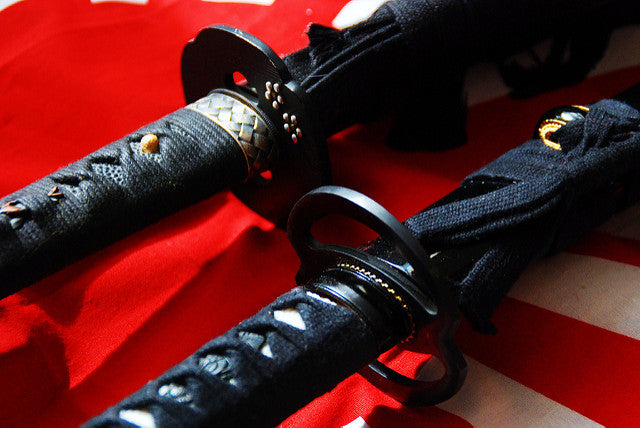

Iaido has become a popular form of martial arts that's practiced by thousands of people from around the world. Originating in feudal Japan, it focuses on drawing one's sword and responding to an attack. In this post, we're going to explore this traditional Japanese martial art, revealing five facts that may surprise you.
#1) There Are Iaido Schools
To put the popularity of Iaido into perspective, there have been numerous schools that teach this martial art. During Japan's Muromachi period, for instance, the Musō Jikiden Eishin-ryū school emerged, bringing this martial art to countless students. Around this same time, the Hoki-ryu school also emerged. According to the All Japan Iaido Federation, there were five major schools that contributed to the development of this now-popular martial art.
#2) Iaido Involves Hundreds of Swordsmanship Styles
No, that's not a typo. Iaido involves the use of hundreds of different styles of swordsmanship. Here's the thing: They all focus on non-combative techniques rather than direct combat. There are two main focuses of this martial art. First, the practitioner must maintain a sense of psychological awareness, always looking for signs of impending attack. Second, the practitioner must be able to draw his or her sword quickly and respond to an opponent's attack.
#3) Iaido Is Practiced Solo
Although Iaido emphasizes the importance of responding to an attack, the martial art is usually practiced solo. A typical competition begins with a single practitioner unsheathing and drawing his or her sword, after which they perform practice strikes using various techniques. An Iaido match always begins and ends with the practitioner unsheathing and sheathing his or her sword.
#4) Iaido Requires a Special Sword
In the past, Iaido was practiced with live-blade swords like the traditional Japanese katana or wakizashi. In recent years, however, practitioners have since switched to a different sword for this martial art, known as a iaito. The iaito isn't just another bamboo or wood practice sword. Rather, it's a real sword with a blunt edge. This allows practitioners to make proper striking techniques while minimizing the risk of self-injury in the process.
#5) Iaido Is Still Practiced
Even after all those years, Iaido is still practiced by thousands of people from across the world. The sport is currently regulated by the All Japan Kendo Federation (AJKF), which creates standards regarding kata and etiquette, while also organizing and regulating competitions. Even in Europe, Iaido is practiced and organized by the European Kendo Federation, which hosts a competition each year.

Toyotomi Hideyoshi's 1588 order to collect farmers' weapons: what the edict said, how it was carried out, and why historians see it as a change of status more than disarmament.

Where handle rattles come from, how to check safely, when a mekugi needs replacing, and when to stop using the sword.

Around 170 Viking-age blades bear the name Ulfberht. Microscope studies show some were made of crucible steel and many were copies. Here is what we know.


