
Your Cart is Empty


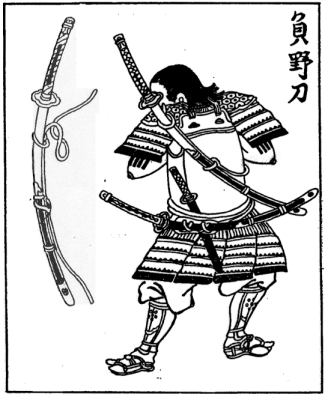

While not as popular as the katana, the ōdachi is traditional Japanese sword that proved instrumental in the country's history. Featuring a long blade, this two-handed sword was used by samurai warriors to make powerful downward cuts. Today, we're going to reveal some fun facts about the ōdachi that you probably didn't know.
#1) The Ōdachi Was The Longest Traditional Japanese Sword
Of all the swords produced during feudal Japan, the ōdachi was the longest. Although there's no standard or universal size defined for it, it typically featured a blade length of approximately 35.79 inches. In comparison, the blade of the katana was approximately 23 5⁄8– 28 3⁄4 inches -- about a one-foot difference between the two!
#2) The Ōdachi's Long Size Makes it Difficult to Forge
Japan is known for perfecting differential heat treatment methods used in swordsmithing. The general idea behind this method is to heat and cool different parts of the sword -- the blade and spine -- at different temperatures; thus, creating a natural curvature while achieving a superior level of strength.
The ōdachi, however, proved difficult and more complicated to forge because of its long size. Long-bladed weapons such as the ōdachi required additional heat, and time, to produce. It also required a larger "quenching medium" to prevent the blade from warping.
#3) The Ōdachi Was Also Difficult for Samurai to Carry
While samurai warriors typically carried their swords around their waists, the ōdachi's long sword forced warriors to carry it using other methods. Historians believe there were two primary ways in which samurai carried the ōdachi: on their back or sheathed in hand.
#4) The Ōdachi is Polished By Hanging Overhead
Normally, most traditional Japanese swords are polished by moving the blade over a polishing stone. Again, though, polishing the ōdachi required a different approach because of its large size. Instead of running the blade over a polishing stone, the ōdachi was polished either by hanging the blade from a ceiling or securing in it stationary position.
#5) The Ōdachi Was a Dual-Purpose Sword
The ōdachi differed from other swords of its time in the sense that it was used for more than just fighting; it was also used for ceremonial purposes. The ōdachi was often used for prayer before battle, with samurai warriors praying to the sword in temples for good luck. Historians believe it was also used as a votive offering to patron gods.

Toyotomi Hideyoshi's 1588 order to collect farmers' weapons: what the edict said, how it was carried out, and why historians see it as a change of status more than disarmament.

Where handle rattles come from, how to check safely, when a mekugi needs replacing, and when to stop using the sword.

Around 170 Viking-age blades bear the name Ulfberht. Microscope studies show some were made of crucible steel and many were copies. Here is what we know.


