
Your Cart is Empty


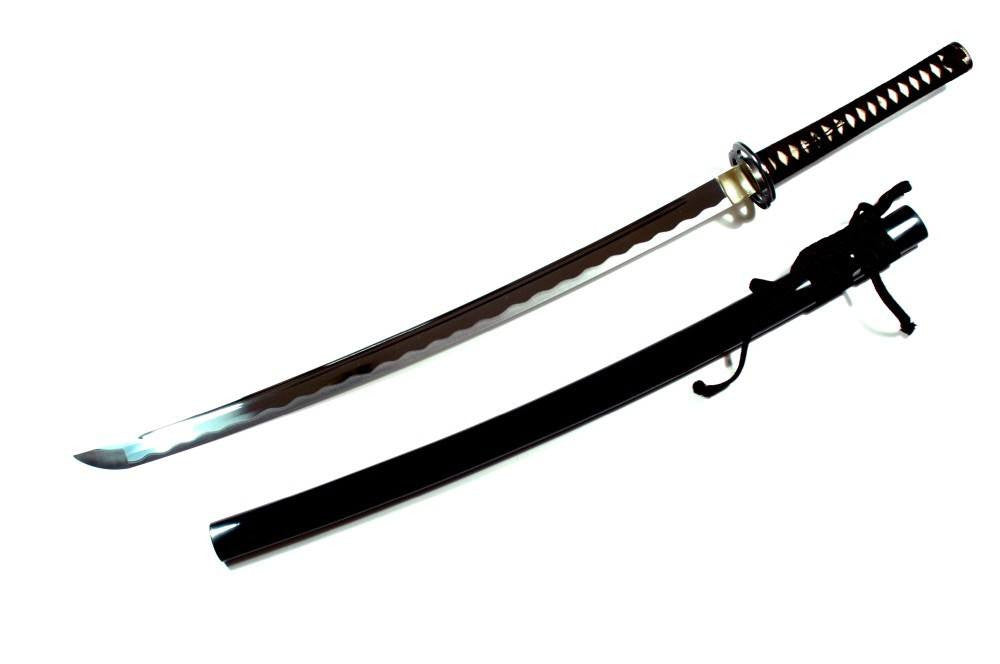
An iaito is a practice sword made for iaido, the art of drawing, cutting and sheathing the sword. It looks and handles like a real katana, but it has no cutting edge. For most students it is the first sword they own, and it will be in their hands for years of practice. Choosing well comes down to a few things: length, weight, blade material, handle size and what your teacher expects. Here is how to work through them.

An L6 steel iaito from our training sword collection.
Before you order anything, talk to your sensei. Some teachers want beginners to start with a wooden sword ( bokken) before moving to an iaito, and some schools have preferences about blade length, weight or fittings. Dojos also differ on whether and when a sharp sword ( shinken) is ever used. Your teacher knows the forms you will practise and how your school does things, and that advice outweighs any general chart. If you are new to the art, our article what is iaido covers the background.
Iaito are usually sized by the height of the practitioner. Lengths are given in shaku, a Japanese unit of about 30.3 cm, and are measured in a straight line from the tip to the notch at the base of the blade, not counting the collar ( habaki).
One widely used retailer chart, which its authors say follows guidelines from the Japanese iaido federation, gives these examples for men:
The same chart shifts each length to a height about 5 cm taller for women, which works out to one size shorter at the same height. Another common check is to hold the sword in its scabbard at your side with a relaxed arm: the tip should stay clear of the floor. That check is less reliable if your arms or legs are longer or shorter than average, which is one more reason to ask your teacher.
Length matters most when you sheathe the sword ( noto). A blade that is too long for your arms makes a smooth, safe noto much harder. When comparing listings, remember that some sellers, including us, measure blade length from the tip to the guard, which includes the habaki. A blade listed that way will read a few centimetres longer than the chart figure for the same sword.
Most iaito made in Japan have blades of aluminium-zinc alloy, which is cheaper and lighter than steel. On the chart above, standard alloy iaito run from about 780 g to 860 g depending on length, and heavier versions from about 900 g to 1,050 g. The same retailer suggests the heavy models for experienced practitioners, since they are harder to handle. A lighter sword lets a beginner concentrate on form. A heavier one gives more feedback but tires the arms sooner.
Alloy blades have limits. They are not made for contact with another sword or with a target, so an alloy iaito is strictly for solo forms. We explain why the alloy is used in why Japanese iaido swords are made of aluminium-zinc alloy.
Steel iaito are the other route. Ours is made of through-hardened L6 steel, which resists bending, and it is blunt. Its hamon is applied for appearance rather than produced by differential hardening. It weighs about 870 g without the scabbard and 1,150 g with it, so it sits close to the alloy range in the hand. Whichever material you choose, an iaito is not a cutting sword, and it should be treated with the same care as a sharp one.
The handle ( tsuka) should give room for both hands with a gap between them. The same chart pairs taller practitioners with longer handles, from about 7.5 to 8 sun (23 to 24 cm) for shorter students up to about 9.5 to 10 sun (29 to 30 cm) for the tallest. Large hands may want the upper end of the range.

The handle of our L6 steel iaito: genuine ray skin under black silk wrap, fixed with two pegs.
Look at how the handle is built. A tsuka fixed with two bamboo pegs ( mekugi) and a tight, even wrap will stay solid through years of drawing. The scabbard ( saya) matters too. It should hold the sword securely yet let it draw cleanly, and its mouth ( koiguchi) takes wear with every noto. The cord ( sageo) should be long enough to tie the way your school ties it.
Once your teacher has given you a length and any preferences, check these points with the seller:
If a standard size does not suit you, our custom training sword page lets you order an L6 steel iaito with a blade from 25 to 36 inches and a handle from 9 to 15 inches, with your choice of fittings. Allow 14 weeks or more from order to delivery for a custom sword. If you would like help translating your teacher's advice into a specification, get in touch.

How to choose a sword for someone else: matching it to their art, sizing it without spoiling the surprise, useful extras, and lead times for custom work.

Toyotomi Hideyoshi's 1588 order to collect farmers' weapons: what the edict said, how it was carried out, and why historians see it as a change of status more than disarmament.

Where handle rattles come from, how to check safely, when a mekugi needs replacing, and when to stop using the sword.


