
Your Cart is Empty


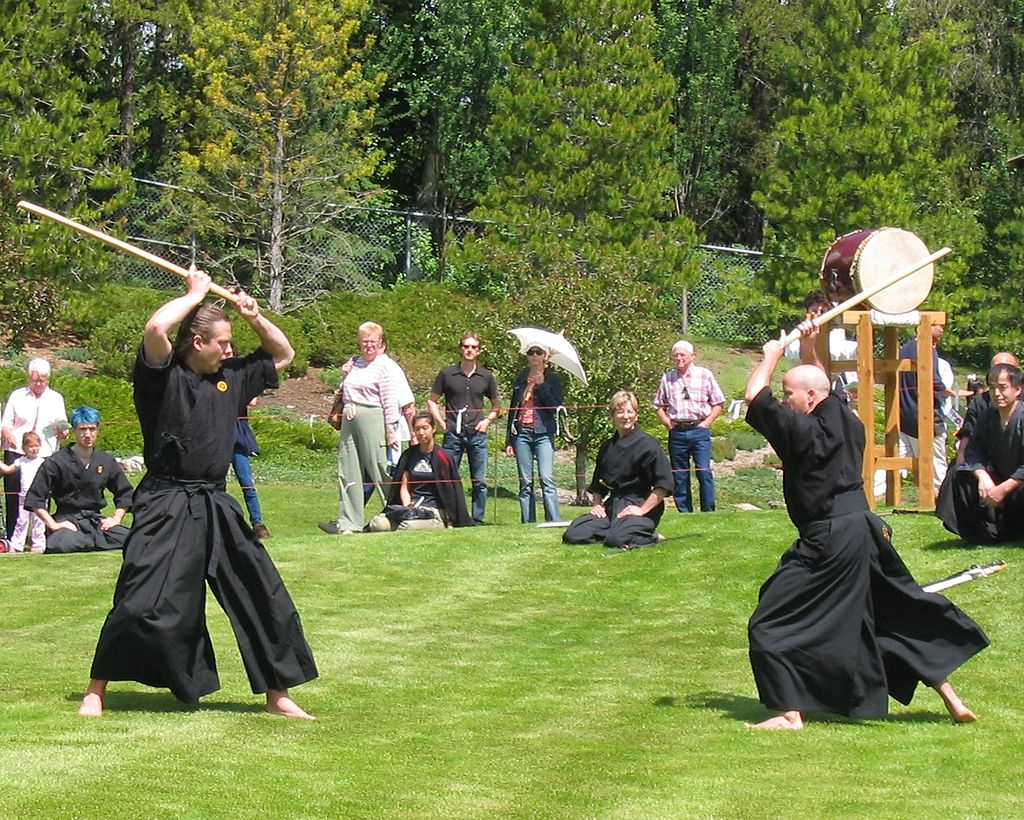

It's no secret that some of the world's most popular styles of martial arts originated from Japan during the country's feudal period. Kenjutsu, for instance, is an umbrella term used to describe all forms of swordsmanship-based traditional Japanese martial arts. Not to be confused with kendo, it's become synonymous with Japan's samurai warriors. Most of the weapons used in kenjutsu don't have live blades, however. Instead, they are practice weapons with dull edges to protect practitioners from injury. So, what are some of the most common types of practice weapons used in Japanese kenjutsu?
Bokken
The most common practice weapon used in Japanese kenjutsu is the bokken. Also known as the bokuto, it's essentially a wooden sword used for training. Most bokken feature a size and shape similar to that of a traditional katana, even including the katana's distinct curvature.
According to Wikipedia, the bokken was invented sometime during Japan's feudal period as a training weapon for samurai warriors. Prior to its invention, samurai warriors were forced to train using real swords with live blades. This, of course, resulted in increased rates of injury, both to the samurai warriors using the swords as well as their opponents. To create a safer training environment, martial arts teachers developed a wooden practice sword, known as the bokken. And even after all those years, the bokken remains the leading practice weapon for use in Japanese kenjutsu.
Shinai
The bokken isn't the only practice weapon used in Japanese kenjutsu, however. Another popular practice weapon is the shinai. Like the bokken, the shinai doesn't feature a live blade. Rather, it's a practice weapon that's made of bamboo.
While the exact design varies depending on who made it, most shinai are comprised of four pieces of bamboo that are secured together with leather or fabric. Once secure, the collection of bamboo is used just like a sword, with kenjutsu practitioners wielding it like a regular sword. Since it lacks a live blade, the shinai has a low risk of injury, making it an excellent training weapon in kenjutsu.

Toyotomi Hideyoshi's 1588 order to collect farmers' weapons: what the edict said, how it was carried out, and why historians see it as a change of status more than disarmament.

Where handle rattles come from, how to check safely, when a mekugi needs replacing, and when to stop using the sword.

Around 170 Viking-age blades bear the name Ulfberht. Microscope studies show some were made of crucible steel and many were copies. Here is what we know.


