
Your Cart is Empty


Every great custom katana begins with a conversation, not a cart. Before we talk about steel or hamon, we translate your goals into measurements you can hold: blade length that suits your reach and posture, a curvature that complements your draw, a profile and thickness that make sense for the targets you’ll cut and the tempo you prefer. We map those decisions onto a clear spec sheet—nagasa and sori, motohaba and sakihaba, kasane and kissaki style—so both sides know what success looks like.
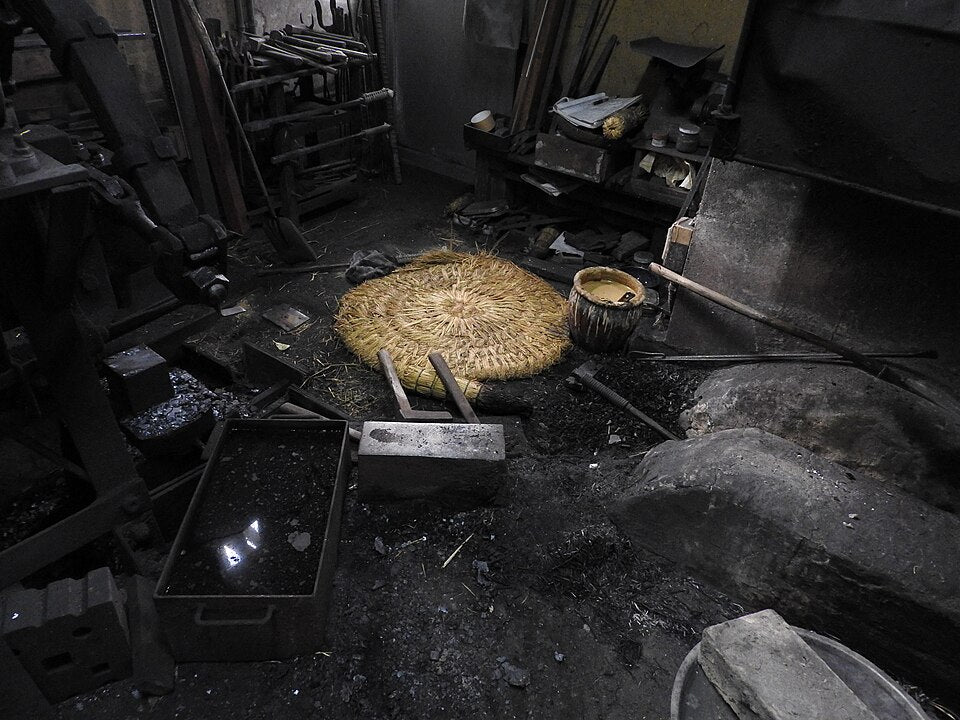
From there the forge takes over. Stock is prepared and refined; the blank becomes a blade under a rhythm of heats and hammering that establish the spine and ridge lines, the tapers and the core geometry. Heat treatment is where intent becomes behavior. Precise temperature control and quench practice decide how much hardness you carry at the edge and how much reserve you keep in the body of the blade. For a customer who wants confidence on bamboo or denser synthetics, we’ll emphasize toughness and a more conservative edge. For a client focused on soft tatami and quick tracking, we’ll bias the geometry and edge angle toward speed while staying inside a safe envelope.
A custom build isn’t just a blade; it’s a system. The habaki is fit to lock the blade to its scabbard and stabilize the guard. The handle core is shaped to your palm and wrapped to spec, with the right diameter and ovality so your wrists don’t fight the sword. Scabbard and fittings follow your chosen aesthetic but keep the first job—secure retention and clean draw—front and center. Before final assembly, the polisher refines the geometry and brings the blade to life. A good polish doesn’t merely shine; it reveals the structures that heat treatment created and preserves the crisp lines that make cutting honest and repeatable.
Quality control is the quiet constant in this journey. Straightness is checked and re‑checked. Balance points are measured, not guessed. Handle wraps are tested for movement, and fittings are seated and re‑seated until they’re right. Only then do we sign off, oil, and ship. The result is more than the sum of parts: a tool that reflects your training and extends your capability.

What nagasa, sori, motohaba, kasane, tsuka length, weight and balance point mean, how each is measured, and how to compare two swords fairly.

What the habaki, tsuba, tsuka, menuki, fuchi, kashira and saya actually do, and how to choose each one when you design a custom katana. Illustrated with museum pieces from the Metropolitan Museum of Art.


