
Your Cart is Empty


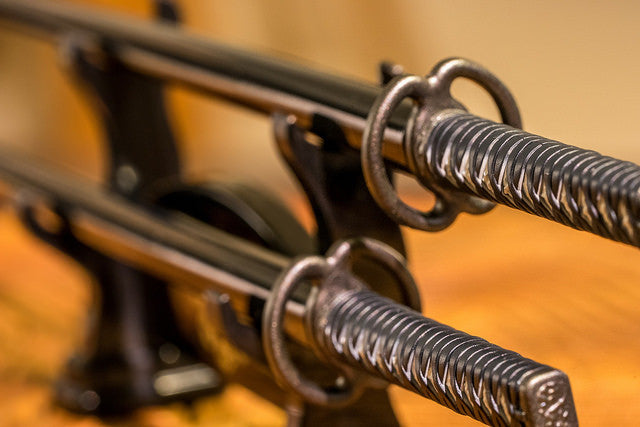

Swords are forged in a variety of lengths, ranging from 12 inches (the wakizashi) to 6 feet (the bidenhänder). Traditionally, longer blades were often preferred for militaristic purposes, with soldiers using them to keep their enemies at a safe distance. For close-quarter combat, however, shorter swords were often favored.
The Evolution from Short to Long Blades
Some of the earliest examples of swords featured short blades that were less than 24 inches long. This is because long-bladed swords weren't practical until the latter years of the Bronze Age due to the low tensile strength of bronze. Long-bladed swords forged prior to this time would easily blend under stress, without reverting back to their original shape.
The increased availability of iron beginning at the 13th century BC allowed swordsmiths to shift from bronze to iron. Iron swords were slightly stronger and more durable than their bronze counterpart. As a result, this led to the production of longer swords.
Of course, it wasn't until the advent of steel when swords really began to expand to longer lengths, with most traditional Japanese and Korean swordsmiths choosing steel over bronze, iron and other metals for its superior level of strength.
So, how do you know which size sword to choose?
Check the Hilt Length
When choosing a sword, you'll need to check for the measurements of two different parts: the blade (nagasa) and handle or hilt (tsuka).
If you have large hands, you should choose a sword with a longer hilt. Consequently, if you have a small hands, you should choose a sword with a shorter hilt. The hilt must be proportionately sized to fit your hand; otherwise, you won't be able to create a strong grip, which in turn reduces the power behind thrusts and slices.
Check the Blade Length
You should also consider the blade length when choosing a sword. As previously stated, short-bladed swords are ideal for close-quarter combat, whereas longer-bladed swords are preferred for combat in open areas. The Silver Haidong Deluxe Jingum features a 28-inch blade, which many martial art practitioners find to be the perfect length.
It's also worth noting that certain Kenjutsu schools require the use of swords with a specific weight, shape and length. In Yagyū Shinkage-ryū, thin swords without a handguard are used. In Kashima Shin-ryū, thicker swords with a large hilt are used. If you plan on using your sword for swordsmanship in Kenjutsu or other schools, you should check with their preferred specifications for sword length.
Photo credit: Sam A
Visit our custom sword order page to see all available blade and handle sizes.


Toyotomi Hideyoshi's 1588 order to collect farmers' weapons: what the edict said, how it was carried out, and why historians see it as a change of status more than disarmament.

Where handle rattles come from, how to check safely, when a mekugi needs replacing, and when to stop using the sword.

Around 170 Viking-age blades bear the name Ulfberht. Microscope studies show some were made of crucible steel and many were copies. Here is what we know.


