
Your Cart is Empty


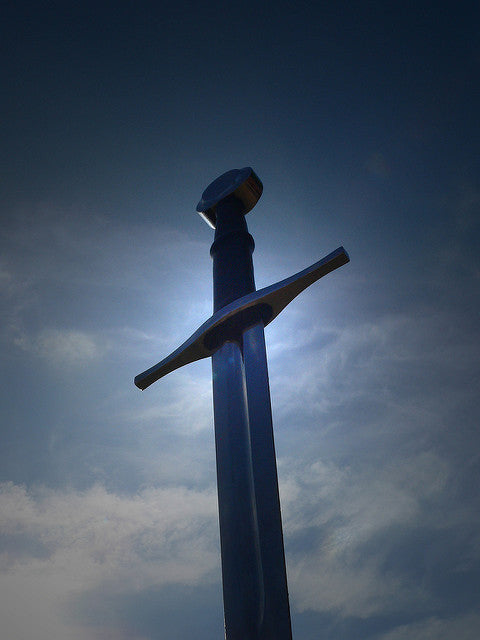

While some swords can be wielded with either one hand or two hands, most are designed for use either a single hand or both hands. The traditional Japanese katana, for instance, was most effective when wielded with a single hand, while the Korean Ssangsudo was most effective with two hands.
One-Handed Swords
The biggest advantage of one-handed swords was the ability for warriors to wield it with a shield. During the medieval age, protection was a critical element on the battlefield. Without protection, warriors were susceptible to traditional attacks from bladed weapons, as well as arrows from archers. A one-handed sword allowed warriors to carry a shield or buckler to protect against such threats. And in situations when protection wasn't necessary, wielding a one-handed sword also allowed warriors to carry a separate weapon, such as a mace.
One-handed swords are also more effective in close-quarter combat due to their shorter blade length. Warriors could unsheathe and use one-handed swords more quickly than their larger counterparts. This made them particularly effective in large-scale battles where dense formations restricted movement.
Examples of one-handed swords include:
Two-Handed Swords
Of course, there are also benefits to using a two-handed sword, the most notable being increased power. Two-handed swords are typically longer and heavier one-handed swords. The heavier weight, combined with the physical strength of using two hands, offered greater stopping power.
Two-handed swords were also ideal for use against armored opponents. When facing an armored opponent, a warrior may struggle to land damaging blows with a one-handed weapon. One-handed weapons typically lacked the power needed to penetrate armor, which is why two-handed weapons were designed. They offered an unparalleled level of stopping power that could penetrate through many common types of armor.
Conversely, two-handed swords more effective in open battlefields than shorter, one-handed swords. Warriors could maintain a safe distance from their opponents by using a two-handed sword.
Examples of two-handed swords include:
Note: there are also swords that can be wielded with either one or two hands, such as the Korean Hwando and Unggeom.
Photo credit: Snake3yes

Toyotomi Hideyoshi's 1588 order to collect farmers' weapons: what the edict said, how it was carried out, and why historians see it as a change of status more than disarmament.

Where handle rattles come from, how to check safely, when a mekugi needs replacing, and when to stop using the sword.

Around 170 Viking-age blades bear the name Ulfberht. Microscope studies show some were made of crucible steel and many were copies. Here is what we know.


