
Your Cart is Empty


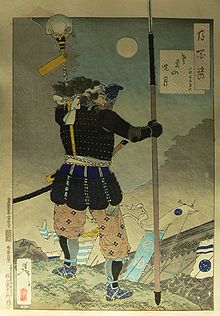

While technically not a sword, the yari was a popular weapon used by samurai warriors in feudal Japan. As shown in the photo to the left, it features a long wooden handle with a metal bladed tip. The spear-like yari was longer than other traditional Japanese weapons like the katana, allowing samurai warriors to keep a greater distance from their opponents.
Characteristics of the Yari
The yari was typically designed with a straight, one-edged blade measuring anywhere from a few centimeters to several feet in length. To create these blades, bladesmiths would smelt high-carbon steel, known as tamahagane steel. This allowed for a superior level of strength, protecting the yari's blade from damage.
Of course, there have been countless designs for the yari. The most common design featured a single bladed tip. Additionally, some yaris were designed with multiple blades or protrusions on the tip, similar to the blade found on a trident. Multiple blades allowed for a more formidable weapon, though it also meant extra work to maintain the yari.
The shaft of the yari was often made of wood or bamboo. Alternatively, some yaris would feature a wooden shaft covered with bamboo wrapping for extra strength.
Origins of the Yari
It's believed that some of the first yaris were derived from Chinese spears. Some of these first yaris appeared in the Nara period (710 to 784). However, the term "yari" didn't appear in written context until the early-to-mid 1330s. Furthermore, the yari didn't become popular until the end of the 15th century.
Nonetheless, the yari rose to popularity in feudal Japan for being cheaper and easier to produce than other bladed weapons. Featuring only a handle and bladed tip, bladesmiths could produce the yari in a fraction of the time it required them to make a sword like the katana. Therefore, the yari was mass-produced and distributed to Japan's armies .
Sōjutsu
You might be surprised to learn that there's a Japanese martial art centered specifically around the yari. Known as sōjutsu, it literally means "art of the spear," which sums up the practice nicely. This non-competitive martial art involves practices and sparring with the yari.
Sōjutsu rose to popularity shortly after the Mongol Invasions of Japan in the 13th century. Over the years, many of the practices surrounding sōjutsu have been lost. With that said, it's still a key component of Japan's history of traditional martial arts.

Toyotomi Hideyoshi's 1588 order to collect farmers' weapons: what the edict said, how it was carried out, and why historians see it as a change of status more than disarmament.

Where handle rattles come from, how to check safely, when a mekugi needs replacing, and when to stop using the sword.

Around 170 Viking-age blades bear the name Ulfberht. Microscope studies show some were made of crucible steel and many were copies. Here is what we know.


