
Your Cart is Empty


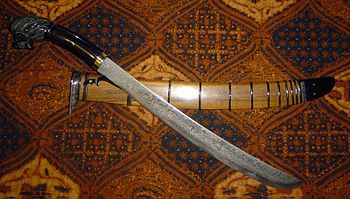

The golok is a short-bladed sword that originated in the Philippines. It features similar characteristics to a traditional machete, including a single edge and slightly curved blade. To learn more about the Filipino golok, keep reading.
Golok Design and Characteristics
The Filipino golok varied in shape, size and weight. Most goluks, however, measured between 9.8 and 19.6 inches (25 and 50 cm), making them about the same size as a traditional machete. The goluk, however, was usually heavier than its machete counterpart, making it a more powerful and efficient weapon.
Additionally, the goluk was typically designed without a tip. The edge of the blade would slowly taper towards the top until it stopped with a flat tip. This means the goluk could not be used for stabbing; rather, it was designed for thrusting and slashing.
Reports indicate that the goluk was traditionally made with carbon steel. Normally, carbon steel is stronger and more durable than "regular" low-carbon steel. Filipino swordsmiths, however, made the goluk with a soft temper, resulting in a higher susceptibility to chipping and other forms of damage. This wasn't necessarily a defect, though, as the goluk's soft tempering made the blade somewhat flexible. At the same time, it also made the goluk more difficult and time consuming to maintain.
Goluk Uses
The goluk was used primarily as a weapon. Like other swords of its time, however, it served multiple purposes. In addition to being used as a weapon, for instance, the goluk was also used as an agricultural cutting tool. Its heavy weight and short design made it ideal for cutting through thick brush. The tapered tip also made the goluk less likely to get stuck in hardwood trees than other swords and machetes.
History of the Golok
Much of the goluk's origins remain shrouded in mystery. It's unknown when the goluk was invented or who was responsible for inventing it. With that said, historians believe the goluk first appeared during the Spanish occupational of the Philippines. After invading the Philippines, the Spanish formed a new law requiring all new machetes to be made without tips. The reason for this was because the Spanish had trouble battling Filipino rebels, many of whom used slashing attacks with swords.
Today, the goluk is still manufactured by Filipino swordsmiths. Some goluks are mass-produced in factories, whereas others are handmade.

Toyotomi Hideyoshi's 1588 order to collect farmers' weapons: what the edict said, how it was carried out, and why historians see it as a change of status more than disarmament.

Where handle rattles come from, how to check safely, when a mekugi needs replacing, and when to stop using the sword.

Around 170 Viking-age blades bear the name Ulfberht. Microscope studies show some were made of crucible steel and many were copies. Here is what we know.


