
Your Cart is Empty


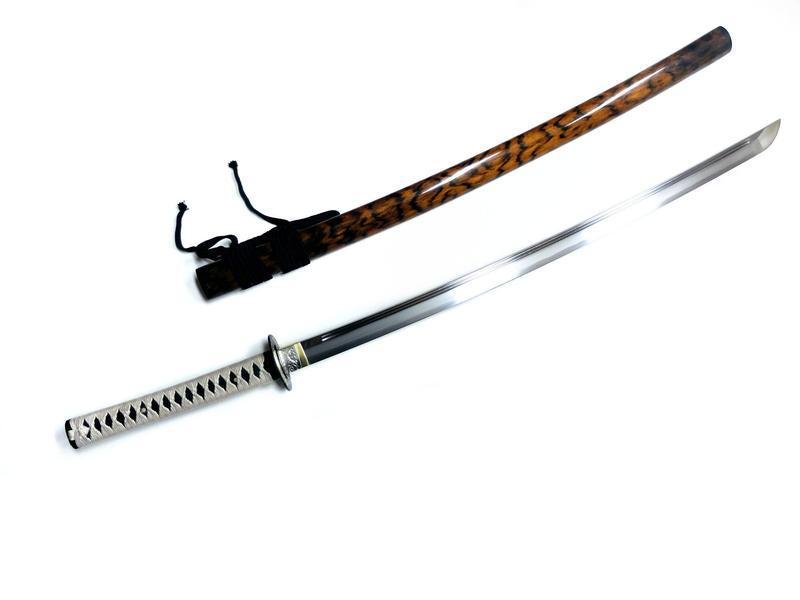
 Traditional Japanese swords like the katana are regarded as being the world's highest quality sword. Developed during the country's feudal period, they are superior to swords and bladed weapons produced in other countries. So, what makes traditional Japanese swords special?
#1) Each Blade is Unique
No two traditional Japanese swords are exactly the same. Different swordsmiths would use different materials and techniques to construct their blades. As a result, each sword was unique. Granted, many swords shared similar features regarding their design, but there were subtle nuances distinguishing them from each other.
#2) Made with Dozens of Layers of Folded Steel
Constructing a traditional Japanese sword was a meticulousness and time-consuming process that, among other things, involved folding steel dozens of times. While monotonous, this folding was essential in creating a strong blade. Each layer of steel added to the sword increased the blade's strength while subsequently reducing the risk of damage.
#3) Three-Dimensional Tip
The tip of traditional Japanese swords, known as a kissaki, was designed with a curved three-dimensional profile. This is in stark contrast to the tips of Western swords, which were designed with a chisel-like tip. The curved three-dimensional tip of traditional Japanese swords allowed for a superior level of sharpness.
#4) Martensite
Perhaps one of the most influential characteristics of traditional Japanese swords was its use of martensite. Not to be confused with pearlite -- which was also used -- martensite is a type of hard steel formed by fast cooling. Japanese swordsmiths would place a thick coat of clay on the sword's spine and a thin coat on the edge, after which the blade would be quenched in either water or oil. Because the edge contained a thinner coat of clay, it cooled more quickly than the spine; thus, turning the steel into hard martensite.
#5) Aesthetics Occurs in the Transition Line
When inspecting traditional Japanese swords, you'll probably notice that many of them contain visually attracting colors, geometric shapes, figures and other designs running vertical along the transition line. Basically, the transition line is where the sword's martensite meets its pearlite. The conflicting properties of these two metals creates unique designs here.
#6) Mountings Were Essential
Sword mountings like a hand guard (tsuba) were essential in the construction of traditional Japanese swords. In fact, swords lacking the necessary mountings typically didn't see any action on the battlefield. Only the finest and most complete swords were distributed to samurai warriors.

Who the Muramasa smiths really were, how their blades became linked to the Tokugawa family's misfortunes, and why historians treat the curse as legend.

What nagasa, sori, motohaba, kasane, tsuka length, weight and balance point mean, how each is measured, and how to compare two swords fairly.

What the habaki, tsuba, tsuka, menuki, fuchi, kashira and saya actually do, and how to choose each one when you design a custom katana. Illustrated with museum pieces from the Metropolitan Museum of Art.


