
Your Cart is Empty


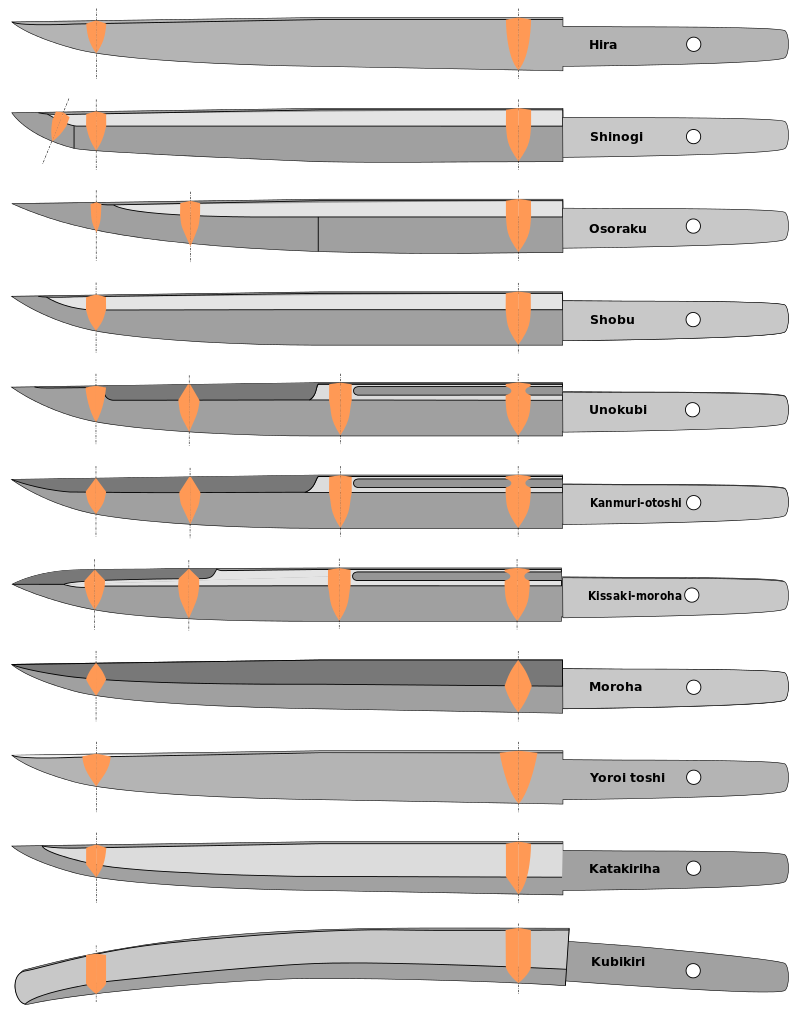

The tanto is one of the most prolific swords originating from feudal Japan. With a average blade length of just 6 to 12 inches (15 to 30 cm), however, it was just a fraction the size of other traditional Japanese swords like the katana and wakizashi. Nonetheless, it was carried and used by countless samurai warriors. But the tanto was often made with a variety of different blades, each of which had a unique design.
Shinogi
Typically used in the creation of long swords, shinogi blades have also been found in the tanto. Shinogi blades are characterized by a ridged center that runs the entire length of the blade. This unique design reduces the tanto's weight while also allowing it to bend and flex under stress without breaking.
Shobu
One of the most common types of blades used in the tanto was the shobu. Shobu blades have a uniquely smooth angle between the cutting edge the tip. It's a simple design that was used by Japanese bladesmiths extensively to produce tantos during the region's feudal period.
Hira
A third type of blade used in the tanto was the hira. With hira-style tantos, the edge bevels to create a triangular intersection that's shaped to a diamond. The hira is a rather basic design that requires minimal tools, resources and work to produce, thereby making it a popular choice among bladesmiths when creating a tanto.
Osoraku
The osoraku is a type of blade used to make traditional tantos that features an unusually long tip. It's slimmer and has a lower profile than other types of blades, allowing for a superior level of sharpness and equally strong slashing power. Due to the osoraku's long tip, however, tantos featuring this blade were more susceptible to damage than those featuring other types of blades.
Hochogata
The hochogata blade is characterized by a short yet wide appearance. It wasn't particularly common, though it gained recognition for being used by the famous Japanese bladesmith Masamune. According to various reports, Masamune actually preferred the hochogata blade design over other types of blades. This prompted other Japanese bladesmiths to follow in Masamune's path by using the hochogata blade in their tantos as well.
Moroha
Most tantos -- as well as other traditional Japanese swords -- were made with a single-edged blade. Tantos with a moroha-style blade, however, featured a double edge. The morohoa blade was sharpened on both edges and featured a diamond cross section.

The bows, carrying positions and ways of passing and placing a sword taught in many dojo, and why schools differ.

Who the Muramasa smiths really were, how their blades became linked to the Tokugawa family's misfortunes, and why historians treat the curse as legend.

What nagasa, sori, motohaba, kasane, tsuka length, weight and balance point mean, how each is measured, and how to compare two swords fairly.


