
Your Cart is Empty


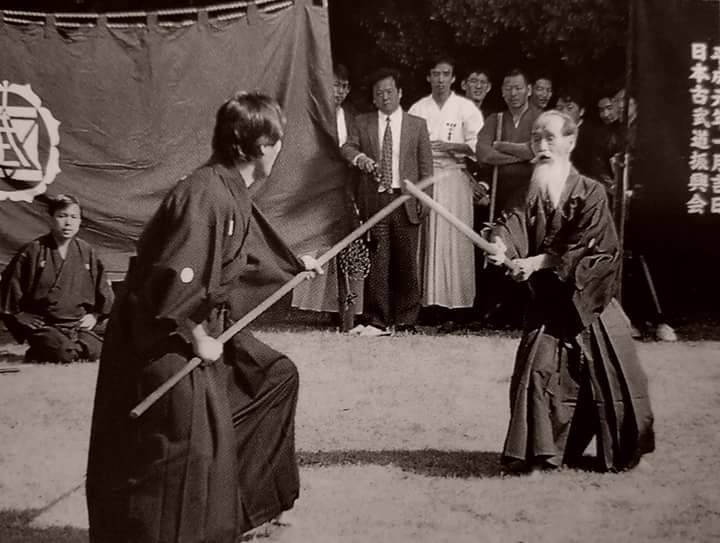

Japan is well known for its martial arts. From sumo and jujitsu to kenjutsu and battōjutsu, the island nation has a rich history of martial arts. With that said, however, Japanese martial arts follows three key concepts that we're going to explore in this post.
#1) Go no sen
Go no sen, which translates to "post-initiative" is one of the three primary concepts of Japanese martial arts. It involves striking an opponent shortly after the opponent attacks. The individual performing Go no sen essentially uses his or her opponent's own momentum to their advantage.
Some people wrongfully assume that Go no sen is a counter-attack, but this isn't necessarily true. While it does involve countering an opponent's attack, Go no sen is more of a mental state that emphasizes concentration and situational awareness in scenarios where the individual may be attacked.
Go no sen also encourages practitioners to never perform a preemptive attack -- not unless they are attacked first (in which case it's technically not a preemptive attack anyway).
#2) Sen no sen
A second concept of Japanese martial arts is Sen no sen. It shares similarities to Go no sen in the sense that both concepts emphasize situational awareness along with the ability to counter an opponent's attack. The key difference between the two, however, is that Go no sen involves countering an opponent's attack after the attack has been made, whereas Sen no sen involves countering simultaneously when the opponent attacks.
With Sen no sen, practitioners should always be thinking about their opponent will do next. When the practitioner sees his or her opponent moving forward, for instance, they may assume the opponent is about to strike, in which case they respond by taking a position that allows them to counter the attack.
#3) Sensen no sen
The third and final concept of Japanese martial arts its Sensen no sen. It differs from the other two aforementioned concept by encouraging the practitioner to perform a preemptive strike -- but only when he or she is anticipating an attack by the opponent. If the practitioner beliefs the opponent will strike, he or she performs a preemptive strike.
However, sensen no sen encourages practitioners to only perform such preemptive strikes when their opponent has fully committed to the attack. If there's any doubt in the practitioner's mind that the opponent will not attack, he or she refrains from making the strike.
All three of these concepts are used heavily in common Japanese martial arts like Aikido, kenjutsu and more.
Photo credit: Ben Askins

Who the Muramasa smiths really were, how their blades became linked to the Tokugawa family's misfortunes, and why historians treat the curse as legend.

What nagasa, sori, motohaba, kasane, tsuka length, weight and balance point mean, how each is measured, and how to compare two swords fairly.

What the habaki, tsuba, tsuka, menuki, fuchi, kashira and saya actually do, and how to choose each one when you design a custom katana. Illustrated with museum pieces from the Metropolitan Museum of Art.


