
Your Cart is Empty


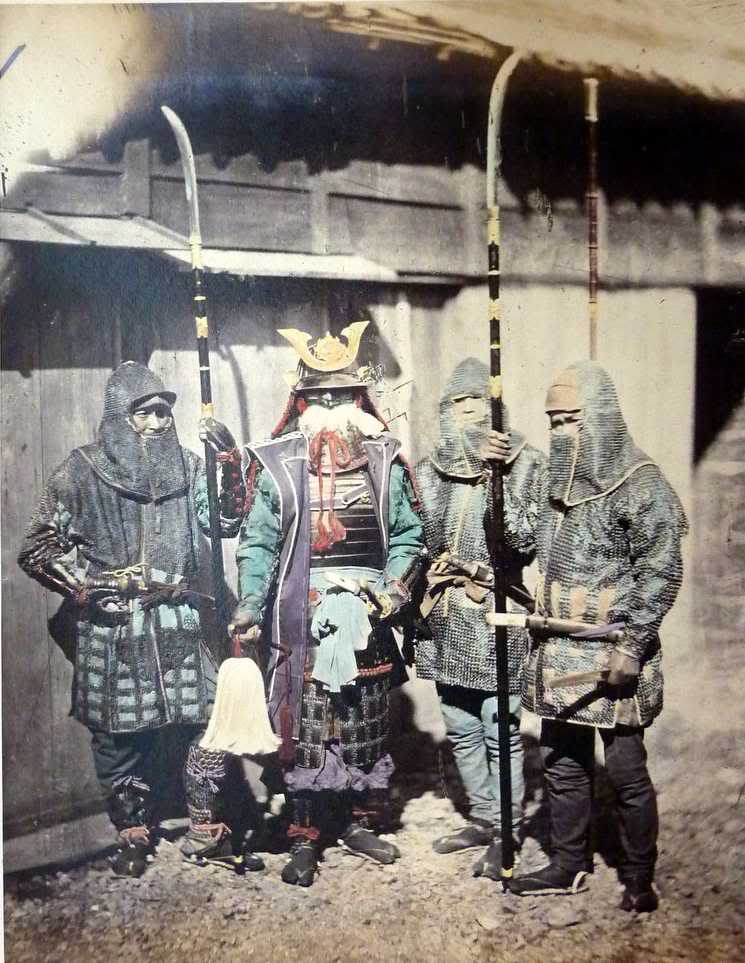

Not all bladed weapons used in feudal Japan were swords like the katana and wakizashi. While these were arguably the two most popular bladed weapons, samurai warriors often wielded other weapons, including the naginata.
Overview of the Naginata
The naginata isn't a specific type of bladed weapon. Rather, it refers to a class of traditional Japanese weapons featuring a long handle with a curved blade at the tip.
Classified as a pole weapon rather than a sword, the naginata were initially used by samurai warriors during feudal Japan. However, they were later used by foot soldiers ( ashigaru) as well as warrior monks ( sohei).
With its exceptionally long blade -- longer than any other sword -- the naginata proved highly effective on the battlefield. It allowed samurai warriors to engage cavalry and armored opponents at a safe distance. For close-quarter combat, however, the naginata offered minimal utility. Of course, this is why samurai warriors were required by Japanese law to carry two weapons: a primary weapon and a shorter secondary weapon.
The naginata could be used in a variety of ways. Typically, though, it was used to stab or hook an opponent.
Origins of the Naginata
So, when was the naginata invented? Some of the earliest reports of this traditional Japanese pole weapon date back to 1146 in the country's Heian period. The naginata is believed to have descended from the hoko kari, which is a spear-like weapon derived from similar weapons produced in China.
In 13th century and 14th century Japanese artwork, samurai warriors are depicted wielding and using the naginata. While still not as popular at the time as the katana or wakizashi, it was a common weapon used by samurai warriors.
Fast forward to the Edo period (1603 to 1868), however, and the naginata faded from the samurai warrior's list of equipment. It still had a purpose, though. Rather than being on the battlefield, the naginata became a symbol of social class among women. Women during this era would proudly display the naginata in their home. Of course, this makes sense considering that the naginata was such a versatile weapon.
Today, the naginata is used primarily in traditional Japanese martial arts like the koryu bujutsu school. With that said, there's a special form of martial arts that's designed specifically for this weapon: naginatajutsu. This Japanese martial art involves wielding and suing the naginata. It's taught primarily in the Bukinkan schools.

Who the Muramasa smiths really were, how their blades became linked to the Tokugawa family's misfortunes, and why historians treat the curse as legend.

What nagasa, sori, motohaba, kasane, tsuka length, weight and balance point mean, how each is measured, and how to compare two swords fairly.

What the habaki, tsuba, tsuka, menuki, fuchi, kashira and saya actually do, and how to choose each one when you design a custom katana. Illustrated with museum pieces from the Metropolitan Museum of Art.


