
Your Cart is Empty


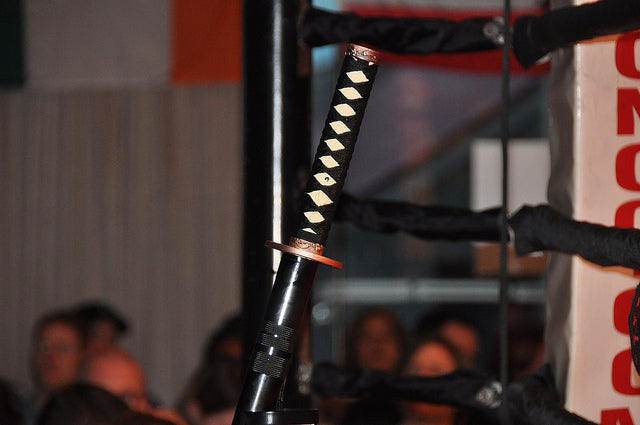

The Japanese katana is arguably the most recognizable sword in the world. With its curved, single-edged blade, it's become synonymous with high-quality swords. In feudal Japan, the katana was the weapon of choice among samurai warriors, whom were required by law to carry a sword on their persons at all times. Of course, the katana's effectiveness was influenced heavily by the sharpness of its blade.
Overview of the Sharpening Process
Forging a traditional Japanese katana wasn't an easy task, nor was it something that swordsmiths could accomplish in just a few hours. If often took weeks or even months for a swordsmith to complete a katana. After the blade was forged, however, it was passed on to someone else for sharpening and polishing.
The process of sharpening a katana's blade hasn't changed much since the days of feudal Japan. The blade is still sharpened using grinding stones, which essentially shed off small amounts of the blade to achieve a razor-sharp edge. Grinding stones today are often as valuable as swords as themselves. Reports suggest that some of the finest quality grinding stones fetch thousands of dollars to seasoned sword collectors and swordsmiths.
Grinding Stone 'Grit'
When sharpening a katana's blade, a coarse, low-grit grinding stone would initially be used, after which the individual would gradually shift to finer, higher grit stones. Of course, this is the same concept used today when sharpening any blade. Whether you are sharpening a sword, knife or any other blade, you typically begin with a coarse grit and end with a fine grit. A coarse-grit grinding stone removes more of the metal, whereas a fine-grit stones helps to create a sharper edge by removing less metal.
Japanese Water Stones
During feudal Japan, water stones were used to sharpen katanas and other bladed weapons. Contrary to what some people believe, Japanese water stones aren't weather-worn stones found in lakes and rivers. Rather, they are natural stones that have been lubricated with water. Japanese swordsmiths discovered that lubricating grinding stones with oil reduced their effectiveness as a sharpening tool. Therefore, they began to lubricate their grinding stones with water. These water stones were typically made of natural materials like silicate particles with clay.
Japanese water stones vary in a wide range of grit coarseness. Some of the most coarse water stones had just 500 to 1,000 grit, whereas the finest water stones had 7,000 to 10,000 grit. The person responsible for sharpening the katana would use a lower grit water stone on the blade, and then he or she move on to a higher grit. Once the edge was sharpened, this person would begin to sharpen the tip, also using water stones for this process.

Who the Muramasa smiths really were, how their blades became linked to the Tokugawa family's misfortunes, and why historians treat the curse as legend.

What nagasa, sori, motohaba, kasane, tsuka length, weight and balance point mean, how each is measured, and how to compare two swords fairly.

What the habaki, tsuba, tsuka, menuki, fuchi, kashira and saya actually do, and how to choose each one when you design a custom katana. Illustrated with museum pieces from the Metropolitan Museum of Art.


