
Your Cart is Empty


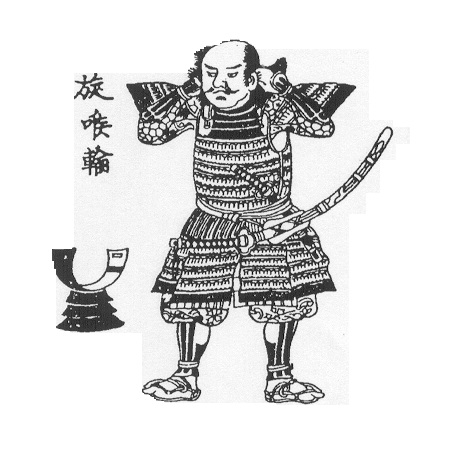

Featuring a similar design as the katana -- including a straight, single-edged blade, the uchigatana is one of the most prolific Japanese swords. Meaning "to strike with sword" or "sword to strike with," it played a key role in Japan's history. For many centuries, Japanese samurai warriors would carry and use the uchigatana in battles. It became so common, in fact, that it was the primary weapon used by samurai warriors at one point.
Like many traditional Japanese swords, however, the uchigatana has evolved over time. While the basic design has followed a consistent pattern, the way in which it was made has changed. To learn more about the uchigatana and how it's evolved throughout feudal Japan, keep reading.
Origins of the Uchigatana
It's believed that the uchigatana was first created during Japan's Kamakura period (1185 to 1333). Distinguished by the ruling of the Kamakura shogun, this was a sensitive time for Japan, as it was being constantly attacked by invading Mongol forces. This prompted the Japanese government to develop new weapons for use on the battlefield, thereby paving the way for the creation of the uchigatana.
Usage of the Uchigatana
During the Kamakura period, however, the uchigatana lacked the strength and versatility needed to make it an effective weapon. As a result, these swords were largely considered disposable, with most samurai warriors smelting them down for scrap metal rather than keeping or repairing them. Samurai warriors still used the uchigatana, but they didn't worry about having it repaired when the sword sustained damage. Because of this, few to no examples of Kamakura-period uchigatana exist today.
The Muromachi Period
It wasn't until the Muromachi period (1336 to 1573) when Japanese swordsmiths began to make the uchigatana using higher quality materials and craftsmanship. Around this time, swordsmiths began using high-carbon steel with differential heat treatment to create stronger, more versatile swords. Samurai warriors during the Muromachi period would often wear the uchigatana with a longer sword, such as the tachi.
The Momoyama Period
Following the Muromachi period was the Momoyama period -- an era considered to be the pinnacle of Japanese swordsmithing. By this time, Japanese swordsmiths had perfected the art of crafting the uchigatana. The uchigatana became one of the most popular and widely used weapons among samurai warriors.
Today, the uchigatana is no longer used for military purposes. Rather, it's used in martial arts like tameshigiri.

Who the Muramasa smiths really were, how their blades became linked to the Tokugawa family's misfortunes, and why historians treat the curse as legend.

What nagasa, sori, motohaba, kasane, tsuka length, weight and balance point mean, how each is measured, and how to compare two swords fairly.

What the habaki, tsuba, tsuka, menuki, fuchi, kashira and saya actually do, and how to choose each one when you design a custom katana. Illustrated with museum pieces from the Metropolitan Museum of Art.


