
Your Cart is Empty


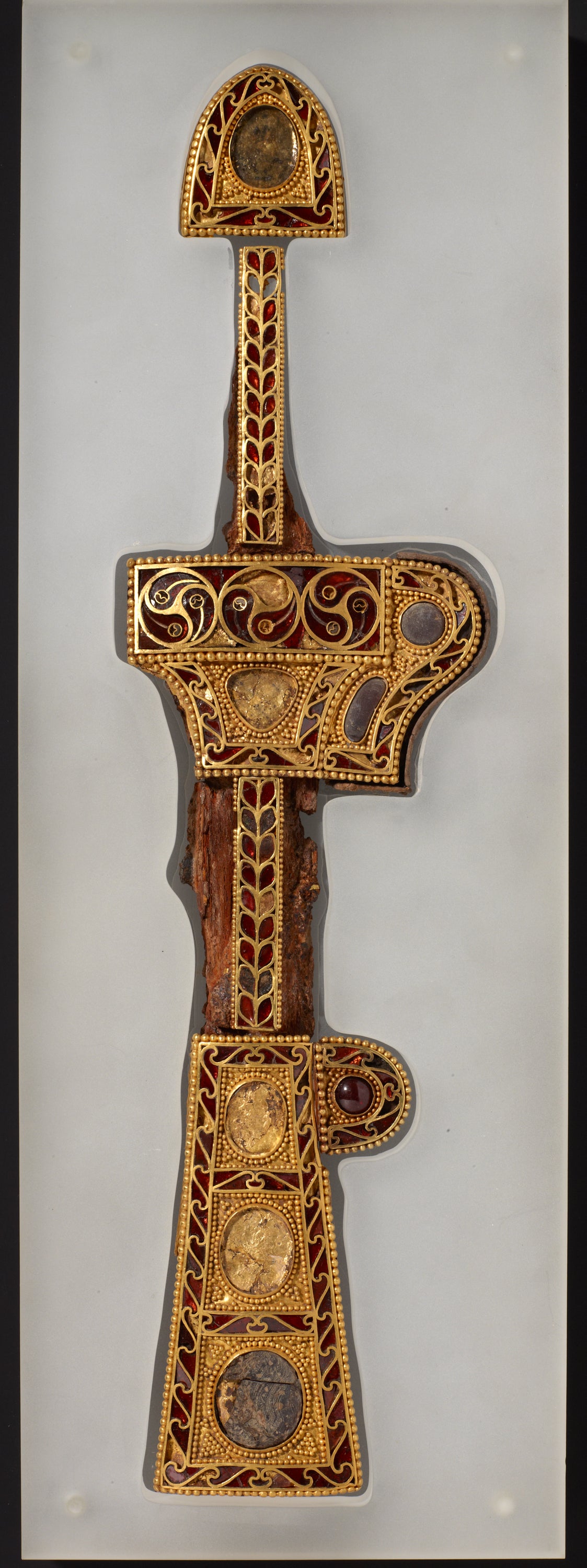

Although they are neighbors, Korean and Japan have their own unique culture and characteristics. For centuries, these two regions have been on the forefront of the bladesmithing industry, pioneering some of the world's finest swords, knives and other bladed weapons. And while they've shared bladesmithing techniques, you'll find that traditional Korean swords are completely unique and independent of traditional Japanese swords. So, how exactly do traditional Korean swords differ from traditional Japanese swords?
Ring Pommel
One of the key differences between traditional Korean swords and Japanese swords is that only the former, in most cases, had a ring pommel. Found at the bottom of the sword's handle, the ringed pommel wasn't used strictly for aesthetic purposes. Although it introduced a new visual element to Korean swords, it also served as a counterweight, making Korean swords more formidable weapons on the battlefield. In comparison, most traditional Japanese swords were forged without a pommel.
Ceremonial Use
Both traditional Korean swords and traditional Japanese swords were used in ceremonies and religious rituals. However, Korea produced far more of these ceremonial swords than its neighbor in Japan. The jingeom, also known as the dragon sword, and the ingeom, also known as the tiger sword, were both used exclusively for ceremonial purposes in Korea. The Korean government even had a law stating that these two swords could only be forged at certain times of the year, thereby limiting the production of the jingeom and ingeom.
Design
If you compare traditional Korean swords with traditional Japanese swords, you'll probably discover some striking nuances in their design. Traditional Japanese swords almost always feature a curved, single-edged blade. Some Korean swords also featured this design, though many featured two edges on the blade rather than one. Some traditional Korean swords also featured a straight blade rather than a curved blade.
Korea Imported Some Swords From Japan
You might be surprised to learn that Korea actually imported some of its swords from Japan. According to Wikipedia, Korea experienced times throughout its history when it was unable to produce swords using materials sourced within its country. Therefore, the Korean government would import swords from some of Japan's renown bladesmiths.
As you can see, traditional Korean swords differed from traditional Japanese swords in several ways. Nonetheless, the two regions are now known as being the global leaders in bladesmithing. Throughout their history, Korea and Japan have produced some of the world's finest swords, and there's no signs of this trend stopping anytime soon.

Who the Muramasa smiths really were, how their blades became linked to the Tokugawa family's misfortunes, and why historians treat the curse as legend.

What nagasa, sori, motohaba, kasane, tsuka length, weight and balance point mean, how each is measured, and how to compare two swords fairly.

What the habaki, tsuba, tsuka, menuki, fuchi, kashira and saya actually do, and how to choose each one when you design a custom katana. Illustrated with museum pieces from the Metropolitan Museum of Art.


