
Your Cart is Empty


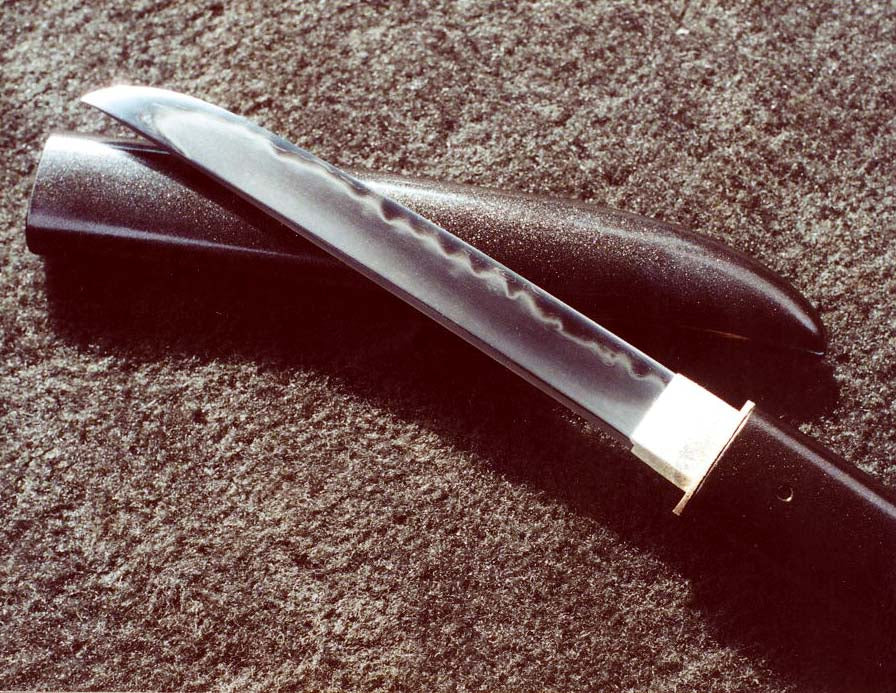

With an average blade size of just 5.9 to 11.8 inches (15 to 30 cm), the tanto is the smallest traditional Japanese sword. However, it was still a common weapon used by samurai warriors throughout the region's feudal period. Many samurai warriors wore the tanto around a sash (obi), using it in close-combat scenarios. In this post, we're going to take a closer look at this traditional Japanese sword, revealing its origins and history.
What Is the Tanto?
Before we explore the origins of the tanto, let's first discuss this sword's characteristics. The tanto is essentially a dagger-like sword that was used primarily for stabbing -- but also for slashing -- attacks throughout feudal Japan. It's been designed in several variations, some of which include a straight edge, whereas others include a double edge. The most common variation, however, was a straight, single-edged blade. This is in stark contrast to the katana, which was designed almost exclusively with a curved edge.
The invention of the Tanto
The tanto was invented sometime during Japan's Heian period (794 to 1185). During this time, samurai warriors discovered the need for a smaller "companion" sword. Prior to the tanto's invention, samurai warriors carried a single, larger sword, such as the katana. While effective in open spaces, the katana was difficult to use in small spaces, thereby prompting swordsmiths to create a new, smaller sword: the tanto.
Around the middle of the Heian period, most samurai warriors began carrying a long sword like the katana and a small sword like the tanto. This versatile combination allowed samurai warriors to engage in combat in both small and open spaces.
Improvements in the Tanto's Design
Following the Heian period, swordsmiths had perfected the tanto's design. Swordsmiths began to include additional aesthetic features on the tanto, such as carvings on the handle and patterns on the blade. They also used higher quality steel, allowing for a stronger and more versatile blade. Rather than using standard steel, for example, they used tamahagane steel. Because of its higher carbon content, tamahagane steel offered greater strength and durability, allowing for a better all-around tanto.
Edo Period Tanto
Like many traditional Japanese swords, the tanto began to fade from use. By the late Edo period, only a few swordsmiths still produced this iconic traditional sword, one of whom was Suishinshi Masahide. Today, the tanto is no longer used for combat purposes, but it is used for collecting and martial arts.

Who the Muramasa smiths really were, how their blades became linked to the Tokugawa family's misfortunes, and why historians treat the curse as legend.

What nagasa, sori, motohaba, kasane, tsuka length, weight and balance point mean, how each is measured, and how to compare two swords fairly.

What the habaki, tsuba, tsuka, menuki, fuchi, kashira and saya actually do, and how to choose each one when you design a custom katana. Illustrated with museum pieces from the Metropolitan Museum of Art.


