
Your Cart is Empty


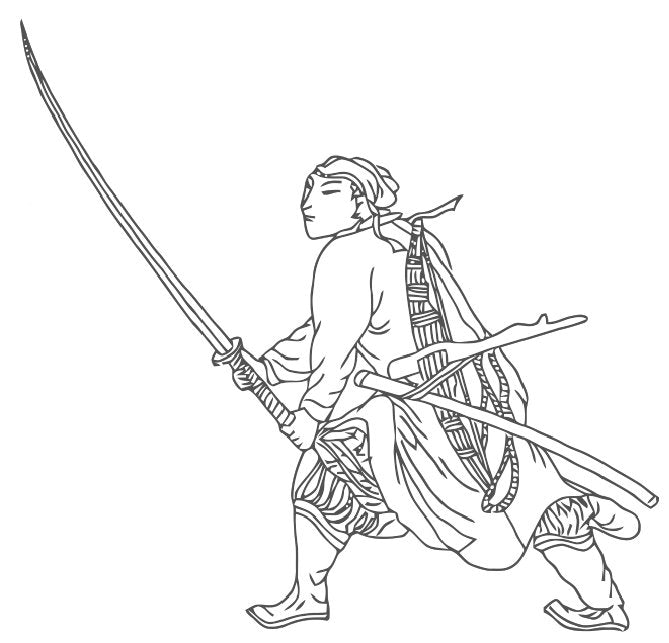

The changdao is a traditional two-handed, single-edged sword of Chinese origin. The term "changdao" literally means "long knife," which accurately describes this centuries-old weapon. As depicted in the illustration to the left, it was incredibly long when compared to other swords of the time.
Origins of the Changdao
The changdao first appeared during China's Tang dynasty (618 to 907). While China had pioneered the art of forging and crafting swords prior to this era, the advent of the changdao proved invaluable for its armies. In fact, it was the weapon of choice among the country's elite vanguard infantry units, many of whom preferred the changdao over shorter swords and other bladed weapons.
According to the Taibai Yinjing, vanguard infantry were placed at the front lines while wielding the chandao. The sword's long blade allowed these infantry units to break through enemy formations in an efficient and effective manner. Furthermore, the changdao proved invaluable when battling cavalry, which the Mongols frequently used when probing China's defenses and attacking its outposts.
About the Changdao
So, just how long was the changdao? Reports indicate the iconic Chinese sword often measured over seven feet long. That length isn't just for the blade, however. The changdao's blade was roughly three feet, while the pole-like handle was about four feet. Nonetheless, it was a long and powerful sword that played a key role in the Tang dynasty's warfare.
Although it first appeared during the Tang dynasty, the changdao later appeared during China's Ming dynasty. However, the term "changdao" was used to describe something entirely different. Instead of referring to the characteristic sword described above, changdao -- when used during the Ming dynasty -- referred to any two-handed sword with a single edge.
The military general of the Ming dynasty Qi Jiguang acquired a martial arts manual from the Japanese, which he studied extensively. Within this manual, there was information about the increased effectiveness of long swords with an equally long handle. So, Qi Jiguang mirrored his troops' weapons to reflect this tactic; thus, leading to increased usage of the changdao. The changdao was such an effective weapon, in fact, that Qi Jiguang ordered up to 40% of his infantry to use it.
Military historians often compare the changdao to the Japanese odachi. Both swords feature a long blade with a long handle. Furthermore, they both feature a curved blade, which is another reason why the chandao and odachi are such effective weapons.

Who the Muramasa smiths really were, how their blades became linked to the Tokugawa family's misfortunes, and why historians treat the curse as legend.

What nagasa, sori, motohaba, kasane, tsuka length, weight and balance point mean, how each is measured, and how to compare two swords fairly.

What the habaki, tsuba, tsuka, menuki, fuchi, kashira and saya actually do, and how to choose each one when you design a custom katana. Illustrated with museum pieces from the Metropolitan Museum of Art.


