
Your Cart is Empty


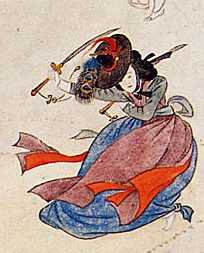

Swords have been around on the Korean Peninsula since the Bronze Age, during which bladesmiths in the region made rudimentary swords out of cast bronze metal. In the years to follow, however, Korea began to perfect the art of crafting high-quality swords, paving the way for some truly unique and powerful weapons. Wile most of these traditional Korean swords fall under the category of geom -- a generic type of straight-edged sword -- others did not. One such alternative sword pioneered on the Korean Peninsula is the hyeopdo, which we're going to explore in this blog post.
What Is the Hyeopdo?
The hyeopdo isn't your average sword. Although it features a long blade, it's more of a polearm weapon and less of an actual sword. The term "hyeopdo" first appeared in a Korean martial arts guide published sometime in the 17th century. Known as Muyeyebobeon, the guide described hyeopdo as being a powerful polearm weapon with a razor-sharp blade. Since then, the term has appeared in numerous other martial arts guides and historical documents.
Design of the Hyeopdo
Different bladesmiths created the hyeopdo in different designs. The most common, traditional design, however, consists of a long pole -- about 4 feet and 11 inches -- with a single-edged blade affixed to the top. The hyeopdo shares similar characteristics to the woldo, a Chinese bladed weapon. But the hyeopdo is distinguishable from the woldo with its single-edged blade.
How the Hyeopdo Was Used
The hyeopdo was used extensively in both combat as well as martial arts. Many warriors and martial arts practitioners preferred it over the woldo because it was slightly smaller, lighter and easier to handle. Standing just under 5 feet, the hyeopdo wasn't too long, nor was it too short. Its moderate length made it a versatile weapon in both combat and martial arts training.
A key drawback of the hyeopdo, however, is its single-edged blade. Without any curvature, a forceful impact may break the blade. To overcome this challenge, Korean bladesmiths developed new metal combinations that could withstand the stress of impact.
The Hyeopdo Today
Even after all those years, the hyeopdo is still a component in many forms of Korean martial arts. Practitioners of traditional Korean martial arts like Tang Soo Doo use the hyeopdo during their training and skirmish sessions. Normally, though, a special version is used that doesn't feature a live, sharp blade.

Who the Muramasa smiths really were, how their blades became linked to the Tokugawa family's misfortunes, and why historians treat the curse as legend.

What nagasa, sori, motohaba, kasane, tsuka length, weight and balance point mean, how each is measured, and how to compare two swords fairly.

What the habaki, tsuba, tsuka, menuki, fuchi, kashira and saya actually do, and how to choose each one when you design a custom katana. Illustrated with museum pieces from the Metropolitan Museum of Art.


