
Your Cart is Empty


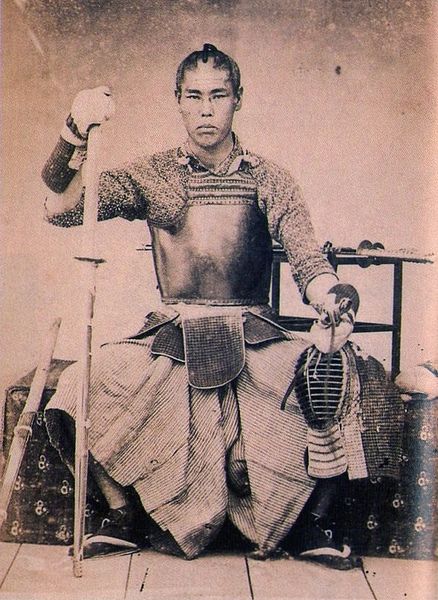

Kendo is one of the most popular styles of traditional Japanese martial arts. It's been around for centuries, and today it's practiced by millions of people throughout the world. Like other traditional Japanese martial arts, though, there's a long, rich history surrounding kendo.
What Is Kendo?
Meaning "way of the sword" or "sword way," kendo is a traditional Japanese martial art that involves two practitioners sparring while using practice swords and protective body armor. It's said to combine elements of martial arts with strenuous activity. The defining characteristic of kendo, though, is that it involves two practitioners attempting to attack and defend against each other while using a practice sword and protective body armor.
The techniques of kendo typically fall under one of two categories: shikake-waza and oji-waza. Shikake-waza refers specifically to attacking techniques, such as thrusting a practice sword towards one's opponent. In comparison, oji-waza refers to a response of an opponent's attack, such as a counterattack.
Origins of Kendo
Kendo can be traced back to Japan's feudal period. Prior to kendo, samurai warriors in Japan would train at kenjutsu skills. Here, they would learn the fundamentals of how to wield and use weapons like the katana, tachi and wakizashi. Of course, kenjutsu is an umbrella term that encompasses all forms of traditional Japanese swordsmanship. It wasn't until later when kenjutsu branched out into multiple, smaller styles of martial arts, including kendo.
It's believed that Naganuma Shirōzaemon Kunisato helped pioneer kendo. During Japan's Shotoku Period (1711 to 1715), Kunisato encourages kenjutsu practitioners to use swords made of bamboo instead of "live" swords with a real blade. He also asked practitioners to wear body armor when sparring. Both of these changes were designed to protect practitioners from injury, thereby creating a safer sport for kendo practitioners.
Eventually, Kunisato's teachings evolved into a new style of martial arts: kendo. In the mid-1940s, however, kendo was banned while Japan was under foreign occupation. In the 1950s, the ban was lifted and citizens were once again free to practice kendo.
Today, there are two primary organizations that govern the sport of kendo: The All Japan Kendo Federation (AJKF) and the International Kendo Federation (FIK). The AJKF was founded in the early 1950s, shortly after the ban on the sport was lifted, while the FIK was founded later in the 1970s. Both organizations continue to hold kendo competitions today.

The kris is a weapon, an heirloom and a sacred object. How to read its blade, how pamor patterns are made, who the empu are, and why UNESCO recognized it.

How to choose a sword for someone else: matching it to their art, sizing it without spoiling the surprise, useful extras, and lead times for custom work.

How to size an iaito for your height, weigh alloy against steel, judge the handle and fittings, and what to ask your sensei and the seller first.


