
Your Cart is Empty


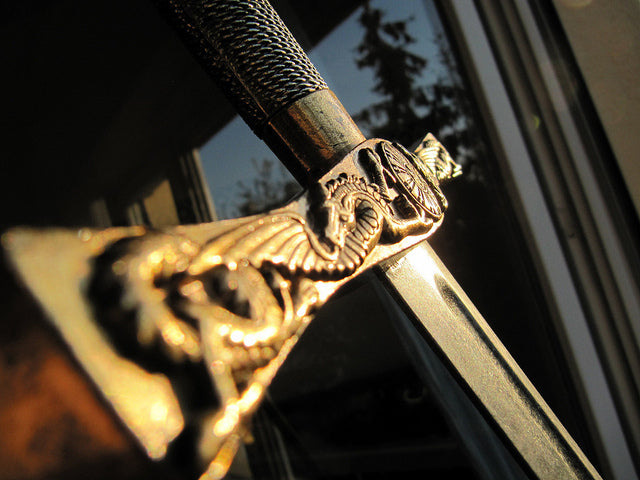

The material used in a sword's construction plays an important role in its quality and performance. Besides stone, some of the world's first swords were made of bronze. Soon thereafter, swordsmiths began crafting blades with iron, followed by steel.
However, another common material used to make swords is carbon steel, which contains both steel and carbon. To learn more about carbon steel swords and why they are popular, keep reading.
#1) Strong Blade
First and foremost, carbon steel swords feature an exceptionally strong blade -- even more so than stainless steel. In feudal Japan, Japan swordsmiths discovered this characteristic of carbon steel; thus, using it to make the katana. While swords made of other metals would easily break, those made of carbon steel would hold up under battle.
#2) Holds an Edge
Another benefit of carbon steel swords is their ability to hold an edge. In other words, the sharp "edge" of the sword wouldn't chip or otherwise break easily. Prior to the invention of carbon steel, samurai warriors would frequently sharpen and polish their swords. Even small amounts of stress on the blade could cause damage. Because it's stronger, however, carbon steel swords aren't susceptible to this type of damage, allowing them to hold an edge.
#3) Sharper Edge
Carbon steel swords don't just hold an edge; they also create sharper edges. The carbon content binds to the iron and other elements, essentially holding everything together. As a result, you can sharpen the blade to a razor-sharp edge.
#4) Aesthetics
Carbon steel swords are also visually attractive. With its clean chrome finish, it's the perfect addition to anyone's sword collection. But this is really just a side benefit of choosing a carbon steel sword. The real benefits lies in its strength and performance.
#5) Variety of Carbon Steels
It's important to note that not all carbon steel swords are the same. There are many different types of carbon steel, each of which has a specific amount of carbon. 1045 carbon steel, for instance, is a popular choice of metal for forging new swords. With a 0.45% carbon content, it's relatively high compared to other metals, making it ideal for swords. Other common types of carbon steel used to make swords includes 1060 and 1096 carbon steel.
After reading this, you may assume that carbon steel swords trump swords made of all other materials. However, there are still some disadvantages to using them. When compared to stainless steel swords, for instance, carbon steel swords are more likely to develop rust and corrosion.
Photo credit: francois

The kris is a weapon, an heirloom and a sacred object. How to read its blade, how pamor patterns are made, who the empu are, and why UNESCO recognized it.

How to choose a sword for someone else: matching it to their art, sizing it without spoiling the surprise, useful extras, and lead times for custom work.

How to size an iaito for your height, weigh alloy against steel, judge the handle and fittings, and what to ask your sensei and the seller first.


