
Your Cart is Empty


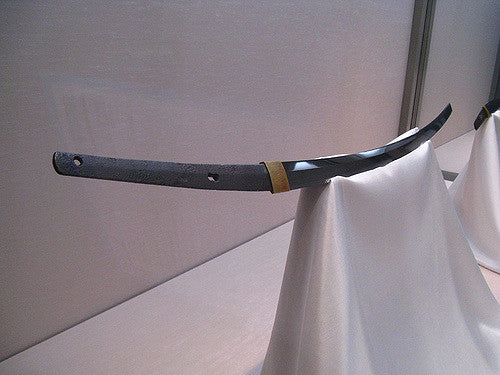

Japan is well known for producing some of the world's highest quality swords. With its curved blade and high-carbon steel, for instance, the katana has become synonymous with quality. While some of these swords were produced by famous swordsmiths like Gorō Nyūdō Masamune, others were produced by schools, including the Dōtanuki school.
Basics of Dōtanuki Swords
Dōtanuki swords are traditional Japanese swords produced by swordsmiths in the Dōtanuki school. These swords were prized for their superior strength, sharpness and cutting ability. Because of these characteristics, many samurai warriors in feudal Japan preferred Dōtanuki swords over other swords.
With that said, swordsmiths in the Dōtanuki school placed minimal emphasis on the appearance and aesthetics of their swords. While other swords contained intricate designs and embellishments, Dōtanuki swords were rather basic in nature. This is because Dōtanuki swordsmiths focused their attention on creating high-quality swords that performed well on the battlefield. They did not care about producing "good-looking" swords.
History of the Dōtanuki School
Origins of the Dōtanuki school can be traced back to Japan's Higo providence. Around the turn of the 14th century, the famous swordsmith Enju Kunimura founded a swordmaking school called the Higo Enju. Kunimura spent countless hours perfecting and teaching the craft of swordmaking; thus, placing the foundation for the Dōtanuki school.
Around the mid-16th century, the Dōtanuki school was founded in the small Higo village of Dōtanuki. Throughout the Koto period, popularity for the Higo Enju school of swordmaking began to decline. With this trend came a newfound popularity for the Dōtanuki school.
Exactly who founded the Dōtanuki school remains a mystery. However, many historians believe it was a swordsmith named Dōtanuki Masakuni. Masakuni, also called by Oyama Kozuke no Suke, is said to have produced swords for Japanese commanders and generals, including Kato Kiyomasa.
As previously mentioned, Dōtanuki swords boasted an exceptional level of strength and durability. While other swords would break on the battlefield, those made by swordsmiths from the Dōtanuki school withstood the hands of time.
The Dōtanuki School Today
Japan's Dōtanuki school of swordmaking is no longer around today. However, its influence remains in the form of modern cultural references. In the video games Soul Caliber II and Soul Caliber III, for instance, the sword Gassan is a Dōtanuki blade. There are also numerous historical words describing Dōtanuki swords.

Who the Muramasa smiths really were, how their blades became linked to the Tokugawa family's misfortunes, and why historians treat the curse as legend.

What nagasa, sori, motohaba, kasane, tsuka length, weight and balance point mean, how each is measured, and how to compare two swords fairly.

What the habaki, tsuba, tsuka, menuki, fuchi, kashira and saya actually do, and how to choose each one when you design a custom katana. Illustrated with museum pieces from the Metropolitan Museum of Art.


