
Your Cart is Empty


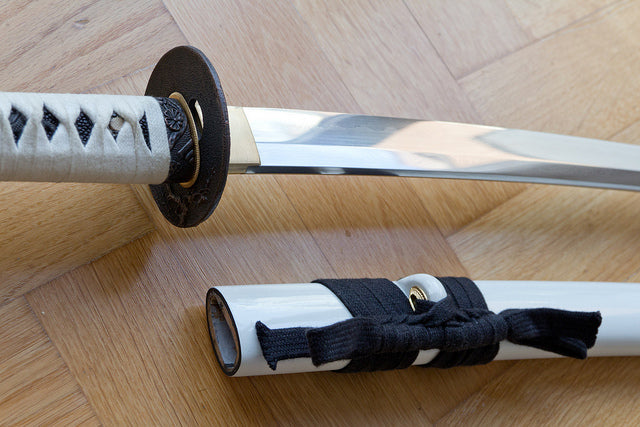

Whether you own a katana, tachi, wakizashi, tanto or any other sword, you need to properly maintain the blade. Swords require very little maintenance to preserve their appearance and structural integrity. However, one essential step in sword maintenance is oiling. By applying oil to your sword's blade, you'll protect it from damage and prolong its lifespan.
Benefits of Oiling Your Swords
The primary purpose of oiling a sword's blade is to protect it from rust and corrosion. Regardless of type, all swords are susceptible to rusting. This natural phenomenon occurs when oxygen molecules reach with the iron metals within a sword's blade, triggering oxidation and subsequently causing it to rust.
I know what you're probably thinking: my sword isn't made of iron, so it's not going to rust. Well, the truth is that all swords have at least some iron content within the blade. Whether it's bronze, stainless steel or high-carbon steel, there's iron present in virtually all metals used to produce swords. Granted, stainless steel has a lower concentration of iron than high-carbon steel, but the fact is that all swords have iron. Therefore, they can all rust.
By coating your sword's blade with oil, you'll create a barrier of protection between the iron metals and outside elements. Rust usually occurs when moisture vapor in the air -- which contains oxygen molecules -- reaches the sword's blade. With oil coating the blade, moisture vapor won't be able to reach the blade, thus protecting against rust and corrosion.
Choosing the Right Oil
There are special oil products designed specifically for swords, some of which are sold in cleaning kits. However, most of these products contain the same basic ingredient: mineral oil. Mineral oil is a safe and effective solution for protecting your swords from rust and corrosion.
Alternatively, you can use choji oil, which is often recommended for use on traditional Japanese swords. With that said, however, choji oil is actually comprised mostly of mineral oil with a small amount of clove oil. The clove oil doesn't serve any functional purposes; it only adds a pleasant scent to the sword when finished.
Applying the Oil
To apply oil, place a small amount of the product a lint-free microfiber cloth and carefully rub it across the surface of your sword's blade, using extreme caution not to accidentally cut yourself. You want to apply a generous coat of oil, ensuring that the entire blade is covered. When finished, carefully place your sword into storage.

Who the Muramasa smiths really were, how their blades became linked to the Tokugawa family's misfortunes, and why historians treat the curse as legend.

What nagasa, sori, motohaba, kasane, tsuka length, weight and balance point mean, how each is measured, and how to compare two swords fairly.

What the habaki, tsuba, tsuka, menuki, fuchi, kashira and saya actually do, and how to choose each one when you design a custom katana. Illustrated with museum pieces from the Metropolitan Museum of Art.


