
Your Cart is Empty


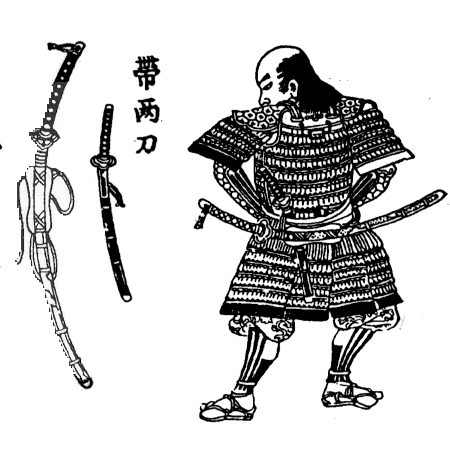

Originating during Japan's Kamakura period (1185 to 1333), the katana is regarded as being the world's highest quality sword. With its single-edged, curved blade made of high-carbon steel, it offers a superior level of strength and versatility. While countless other swords have been invented since its inception, the katana remains one of the most recognizable swords in the world. Aside from physical properties, though, a defining characteristic of the traditional Japanese katana lies in the way in which it was worn.
The katana is unique in the sense that it's the only sword worn with the cutting edge facing up. Normally, swords are worn with the cutting edge fading down to minimize the risk of self-injury. Whether it's Japan, Korea, China or elsewhere, people have worn swords with the cutting edge facing down for centuries. During Japan's feudal period, however, samurai warriors began wearing the katana with the cutting edge facing up, leaving many people to ask the question why.
It Allows for Faster Unsheathing
One reason the katana was worn with the cutting edge facing up is that it allows for faster unsheathing and drawing. Samurai warriors could grab the katana's hilt with one hand and quickly unsheathe it, thereby giving them an advantage over their enemies. The difference in time it takes to unsheathe a katana with the cutting edge up and a different sword with the cutting edge down is minimal. However, those split seconds or even fractions of a second can mean the difference between winning or losing a fight.
It Protects the Blade's Edge
Another reason the katana was worn with the cutting edge facing up is that it protects the blade's edge from wear and tear. Like the katana, the scabbard in which the katana is stored has a sharp edge and a dull edge. The katana's sharp edge rests against the dull edge of the scabbard. As a result, wearing the katana with the cutting edge up naturally protects it from damage, allowing for a razor-sharp edge.
Unsheathing and Striking Requires a Single Motion
Perhaps the most important reason for wearing the katana with the cutting edge up is that it allows for a single motion to unsheath and strike an opponent. When wearing a sword with the cutting edge down, the samurai warrior must draw his sword and then perform the striking motion. These steps are consolidated into a single fluid motion, however, when wearing a katana with the cutting edge facing up.

The kris is a weapon, an heirloom and a sacred object. How to read its blade, how pamor patterns are made, who the empu are, and why UNESCO recognized it.

How to choose a sword for someone else: matching it to their art, sizing it without spoiling the surprise, useful extras, and lead times for custom work.

How to size an iaito for your height, weigh alloy against steel, judge the handle and fittings, and what to ask your sensei and the seller first.


