
Your Cart is Empty


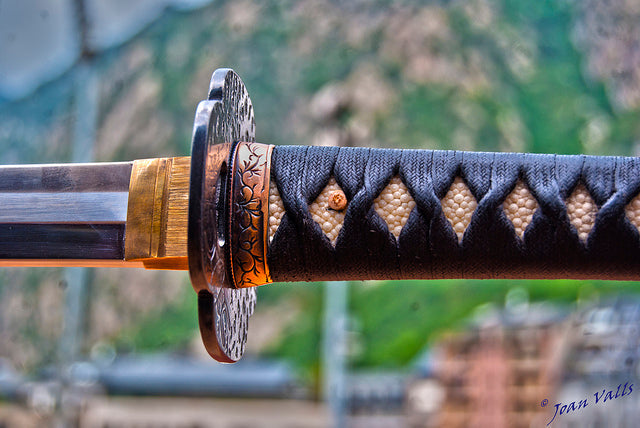

The katana is undoubtedly one of the world's most recognizable swords. Featuring a curved, single-edged blade, it's become synonymous with quality craftsmanship. However, there's a lot of misinformation out there on the topic of katanas. In this post, we're going to debunk some of the most common myths about the Japanese katana.
#1) There's No Difference Between a Tachi and Katana
The terms "tachi" and "katana" are often used interchangeably when referring to traditional Japanese swords with a curved, single-edged blade. While they both feature these blade characteristics, though, there are some key nuances distinguishing them from each other. The katana, for instance, was worn with the cutting edge facing up, whereas the tachi was worn with the cutting edge facing down. The tachi was also longer and featured a more prominent blade curvature.
#2) The Katana Was Used Exclusively on the Battlefield
The katana was the weapon of choice among Japanese samurai warriors during the region's feudal period. However, it was used for other purposes outside of the battlefield. Many martial arts practitioners used the katana in iaijutsu, battojutsu, iado and ninjutsu. The katana was even used in ceremonial rituals.
#3) All Traditional Katanas Were Made Equal
The quality of a traditional Japanese katana varied depending on many factors. During the early day's of Japan's swordsmithing craft, low-carbon steel was used to make the katana, resulting in an inferior quality. It wasn't until the advent of high-carbon steel, known as tamahagane, when the katana features the superior quality for which it's now known.
#4) Katanas Are Made Only By Swordsmiths
Although the swordsmith plays the most important role in the production of a traditional Japanese katana, other individuals also participate in the process. After a swordsmith has forged the blade, for example, the katana is passed down to another individual for polishing and sharping. During feudal Japan, polishing and sharpening a katana often required three or four weeks worth of work.
#5) Katanas Can Cut Through Other Swords
The katana is a strong, powerful sword, but that doesn't necessarily mean it's capable of cutting through other swords. If another swords featured a stronger blade, attempting to cut it with a katana would likely damage the katana's blade.
#6) All Katanas Were the Same Length
Finally, it's a common myth that all traditional Japanese katanas featured the same length. Like all traditional Japanese swords, swordsmiths made the katana with a variety of blade lengths, most of which ranged from 23 5⁄8 to 28 3⁄4 inches.
Photo credit: Joan Valls

Who the Muramasa smiths really were, how their blades became linked to the Tokugawa family's misfortunes, and why historians treat the curse as legend.

What nagasa, sori, motohaba, kasane, tsuka length, weight and balance point mean, how each is measured, and how to compare two swords fairly.

What the habaki, tsuba, tsuka, menuki, fuchi, kashira and saya actually do, and how to choose each one when you design a custom katana. Illustrated with museum pieces from the Metropolitan Museum of Art.


