
Your Cart is Empty


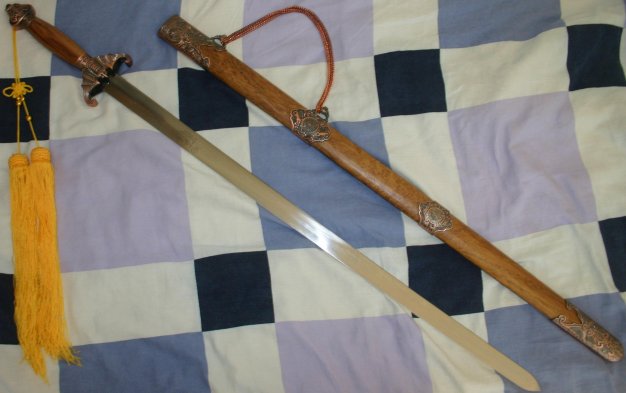

Not to be confused with the dao, the jian is a traditional Chinese sword that's characterized by a straight, double-edged blade. Shown in the image to the left, it featured a moderate length with a standard handle and crossguard. But even if you're familiar with the jian's basic design, there are probably some things you don't know about this age-old Chinese sword.
#1) Some Jian Were Made of Solid Jade
Originally, the jian was made of bronze. During the Bronze Age, swords, daggers and other bladed weapons were forged using cast bronze. Smelted bronze was poured into pre-shaped cast molds, allowing for the creation of bladed weapons. In the years to follow, the jian was made of steel, specifically high-carbon steel. However, some traditional jian were made of solid jade. The jade was carefully cut to create a fully functional jian.
#2) The Jian Was Invented 2,500 Years Ago
To say the jian is old would be an understatement. With origins dating back approximately 2,500 years ago, it's one of the oldest swords on the planet. It's so old, in fact, that historians continue to speculate on when exactly it was invented or who invented it. With that said, evidence shows that the jian was used in China around 500 B.C.
#3) The Blade Weighed Less Than 2 Pounds
Although it featured a moderate length -- about 18 to 31 inches -- the jian was particularly lightweight when compared to other swords at the time. According to Wikipedia, the average weight of the jian's blade was just 1.5 to 2 pounds. This was partially due to the blade's slim, low-profile design. With its lightweight characteristics, warriors and swordsmanship practitioners could easily handle and maneuver the jian.
#4) The Jian Was Used for Test Cutting
In addition to combat, the jian was used for test cutting. The Chinese swordsmanship style shizhan involves practitioners using the jian to cut targets made of bamboo or rice straw. This is similar to the traditional Japanese swordsmanship style tameshigiri, which also involves practitioners using a sword to cut targets.
#5) The Jian Is Still Used in Martial Arts Training
Even after all those years, the jian is still used in martial arts training. The Chinese martial art taijiquan, for example, revolves almost exclusively around the use of the jian. Practitioners of taijiquan perform various movements while wielding a jian. It's believed that these movements are beneficial for both self-defense training as well as general health.

Who the Muramasa smiths really were, how their blades became linked to the Tokugawa family's misfortunes, and why historians treat the curse as legend.

What nagasa, sori, motohaba, kasane, tsuka length, weight and balance point mean, how each is measured, and how to compare two swords fairly.

What the habaki, tsuba, tsuka, menuki, fuchi, kashira and saya actually do, and how to choose each one when you design a custom katana. Illustrated with museum pieces from the Metropolitan Museum of Art.


