
Your Cart is Empty


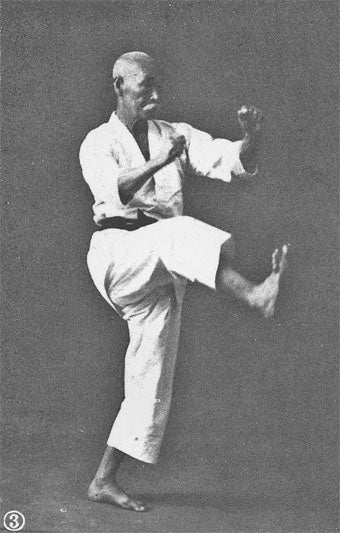

Karate is arguably one of the world's most popular martial arts. Originating from Japan, it's a combative style of martial arts that involves punching, kicking, elbow strikes and other forms of direct combat. In some cases, karate may also include grappling, joint locks and restraints. But while most people are familiar with karate, many are confused when hearing otherwise common terms associated with the martial art.
#1) Kata
Meaning "shape," kata refers to the sequence of movements in karate. It includes both offensive and defensive posture that guide practitioners to a more technical style of karate. Each level of karate has specific kata that practitioners must master to achieve the level's rank. Only then will a practitioner increase his or her rank in karate.
#2) Kumite
In karate, the term "kumite" refers to the sparring, either by a single practitioner or two more practitioners. Some practitioners perform kumite by themselves to better improve their karate skills, while others perform it with other practitioners. Either way, sparring in karate is known universally as kumite.
#3) Kihon
There's also the term "kihon," which in karate refers to all basic techniques of the martial arts. Among other things, kihon covers techniques such as strikes, punches, kicks, blocks, counterattacks and grappling. Practitioners of karate often learn kihon while performing grills. Some of these drills are performed win pairs, while others are performed in small groups.
#4) Dojo Kun
The term "dojo kun" refers to a specific set of rules that practitioners of karate must follow. It's important to note, however, that these rules aren't limited strictly to the training dojo. Karate practitioners must follow these rules in everyday life, both in and out of the training dojo.
#5) Kyokushin
There are several different subtypes of karate, one of which is kyokushin. Kyokushin is a specific style of karate that emphasizes takedown techniques. In this style, practitioners attempt to take down their opponent using a variety of strikes, grabs and counters. Practitioners of kyokusih earn points for successful strikes, and the practitioner with the most points win the match.
#6) Jiyu Kumite
A second subtype of karate is jiyu kumite. While kyokushin involves takedowns, however, jiyu kumite focuses on free sparring. Practitioners of jiyu kumite can still use takedowns, but they are encourages to perform other maneuvers like leg sweeps and throws. As a result, jiyu kumite offers a greater level of freedom for practitioners to choose their own techniques than kyokushin.

Who the Muramasa smiths really were, how their blades became linked to the Tokugawa family's misfortunes, and why historians treat the curse as legend.

What nagasa, sori, motohaba, kasane, tsuka length, weight and balance point mean, how each is measured, and how to compare two swords fairly.

What the habaki, tsuba, tsuka, menuki, fuchi, kashira and saya actually do, and how to choose each one when you design a custom katana. Illustrated with museum pieces from the Metropolitan Museum of Art.


