
Your Cart is Empty


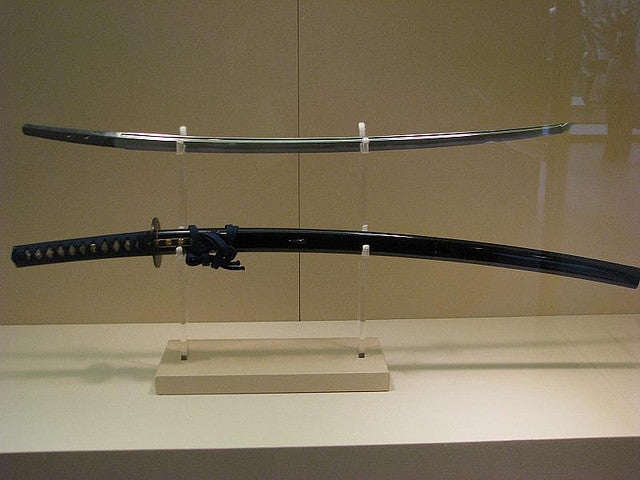

Whether you're a collector or martial arts practitioners, it's important to maintain your swords. From the katana and wakizashi to the tanto and tachi, all swords regular some regular maintenance to preserve their appearance and structural integrity. While most damage occurs from rusting, you might be surprised to learn that swords can develop mold and mildew as well.
What Is Mold and Mildew?
Mold and mildew are forms of fungus that grow in moist environments where organic matter is readily available. Generally speaking, mildew is lighter, less invasive fungus than mold. When mold forms, it often creates the appearance of black or green layer covering the surface on which it's infested.
Whether it's mold or mildew, fungi isn't as concerning as rust. Rust can literally eat through a sword's blade, causing extensive, permanent damage that cannot be easily repaired. Mold and mildew, on the other hand, can usually be cleaned off simply by wiping the affected area with a cloth towel and cleaning solution. Nonetheless, owners should take the necessary precautions to protect their swords from mold and mildew.
Wooden Swords vs Metal Swords
The good news is that mold and mildew typically forms on wooden swords and not metal swords. This is because fungi requires organic matter to thrive. Metal swords are made of inorganic material. Therefore, there's no "food" for mold or mildew. With wooden practice swords, however, fungi may feast on the organic cellulose material.
Watch the Oils!
Even if you have a metal sword, though, it may still develop mold or mildew due to the use of certain oils. It's not uncommon for sword collectors to oil their blades. With oil covering the blade, it's protected from rust and corrosion. The downside, however, is that some oils contain salts -- and fungi may thrive on these salts. To protect your sword from mold and mildew, avoid using salt-based oils on the blade.
Humidity Control
You can also protect your swords from mold and mildew by controlling the humidity of the environment in which they are stored. Fungi needs two things to grow: moisture and organic matter. By controlling the humidity, you'll eliminate moisture from the equation. So, store your sword in an environment with a relative humidity level of 40% to 50% to protect it from mold and mildew. This, combined with choosing a salt-free oil, should prevent fungi from forming on the blade.

Toyotomi Hideyoshi's 1588 order to collect farmers' weapons: what the edict said, how it was carried out, and why historians see it as a change of status more than disarmament.

Where handle rattles come from, how to check safely, when a mekugi needs replacing, and when to stop using the sword.

Around 170 Viking-age blades bear the name Ulfberht. Microscope studies show some were made of crucible steel and many were copies. Here is what we know.


