
Your Cart is Empty


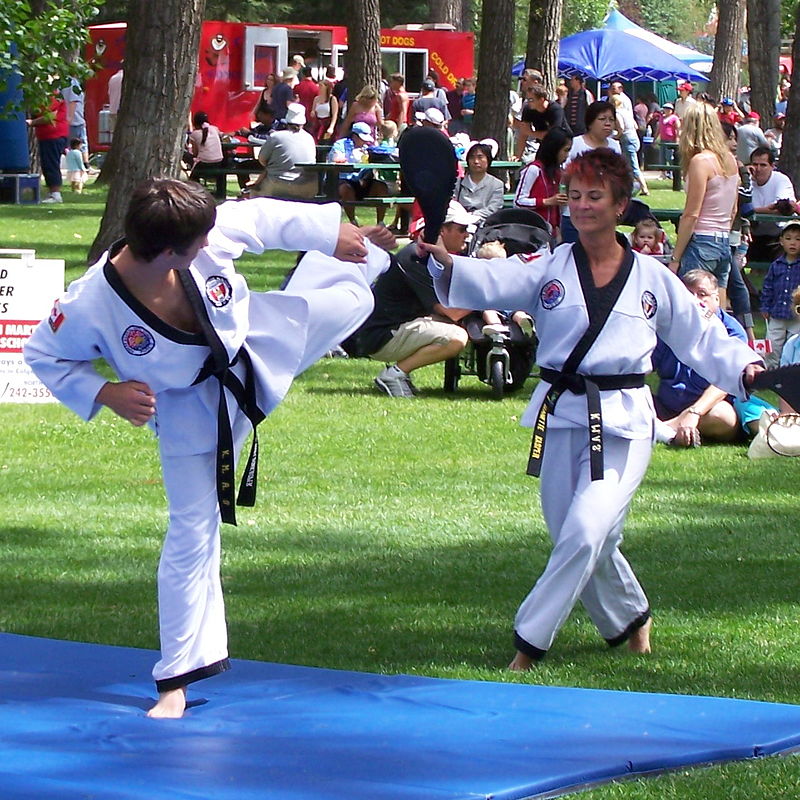

Martial arts on the Korean Peninsula has origins dating back thousands of years. According to Wikipedia, one of the first Korean martial arts to appear was ssireum. A style of wrestling, it was used primarily to train soldiers in the Korean Army during the region's Goguryeo dynasty (37 B.C. to 668 A.D.). Since then, several other styles of martial arts have emerged on the Korean Peninsula, including Taekwondo, Taekkyeon, subak, Tang Soo Do, Soo Bahk Do and more. While each of these martial arts has its own unique characteristics, however, they all rely on four primarily teacher roles. The following four teacher roles are essential to Korean martial arts, as they provide practitioners with the guidance and knowledge needed to excel in their respective martial art.
#1) Kyosanim
Kyosanim refers to the primary teacher of a Korean martial art. The kyosanim is responsible for conducting one-on-one sessions with practitioners, teaching them the necessary skills. In Taekwondo, for example, he or she may have faux sparring sessions with a practitioner. During these sessions, the kyosanim will place the practitioner's arms in the appropriate position, explaining to the practitioner how to take them down. The kyosanim is generally the first person a practitioner will approach if he or she needs assistance with the respective martial art they are practicing.
#2) Sabomnim
In Korean martial arts, the sabomnim is the master instructor who oversees all kyosanim as well as his or her students. In many cases, practitioners won't engage with the sabomnim. Rather, the sabomnim stands back to observe how the kyosanim teaches his or her students. If the kyosanim doesn't teach a concept correctly, the sabomnim will step in. It's important to note, however, that not all styles of Korean martial arts have a sabomnim. While found in most traditional styles, certain styles omit this teacher title, such as Kuk Sool Won.
#3) Kwanjangnim
A step up the Korean martial arts ladder is the kwanjangnim. As you may know, most Korean martial arts are practiced in training halls. In some cases, the sabomnim owns the training hall. In others, someone else owns the training hall. Kwanjangnim refers to the person who owns the training hall in which a traditional Korean martial art is practiced.
#4) Dojunim
Finally, dojunim is the person responsible for creating or founding a specific style of Korean martial arts. Ji Han-Jae, for example, was responsible for creating the martial art Sin Moo Hapkido.
There are typically four teacher titles in traditional Korean martial arts, including the kyosanim, sabomnim, kwanjangnim and dojunim. As explained here, each title has its own unique characteristics.

Who the Muramasa smiths really were, how their blades became linked to the Tokugawa family's misfortunes, and why historians treat the curse as legend.

What nagasa, sori, motohaba, kasane, tsuka length, weight and balance point mean, how each is measured, and how to compare two swords fairly.

What the habaki, tsuba, tsuka, menuki, fuchi, kashira and saya actually do, and how to choose each one when you design a custom katana. Illustrated with museum pieces from the Metropolitan Museum of Art.


