
Your Cart is Empty


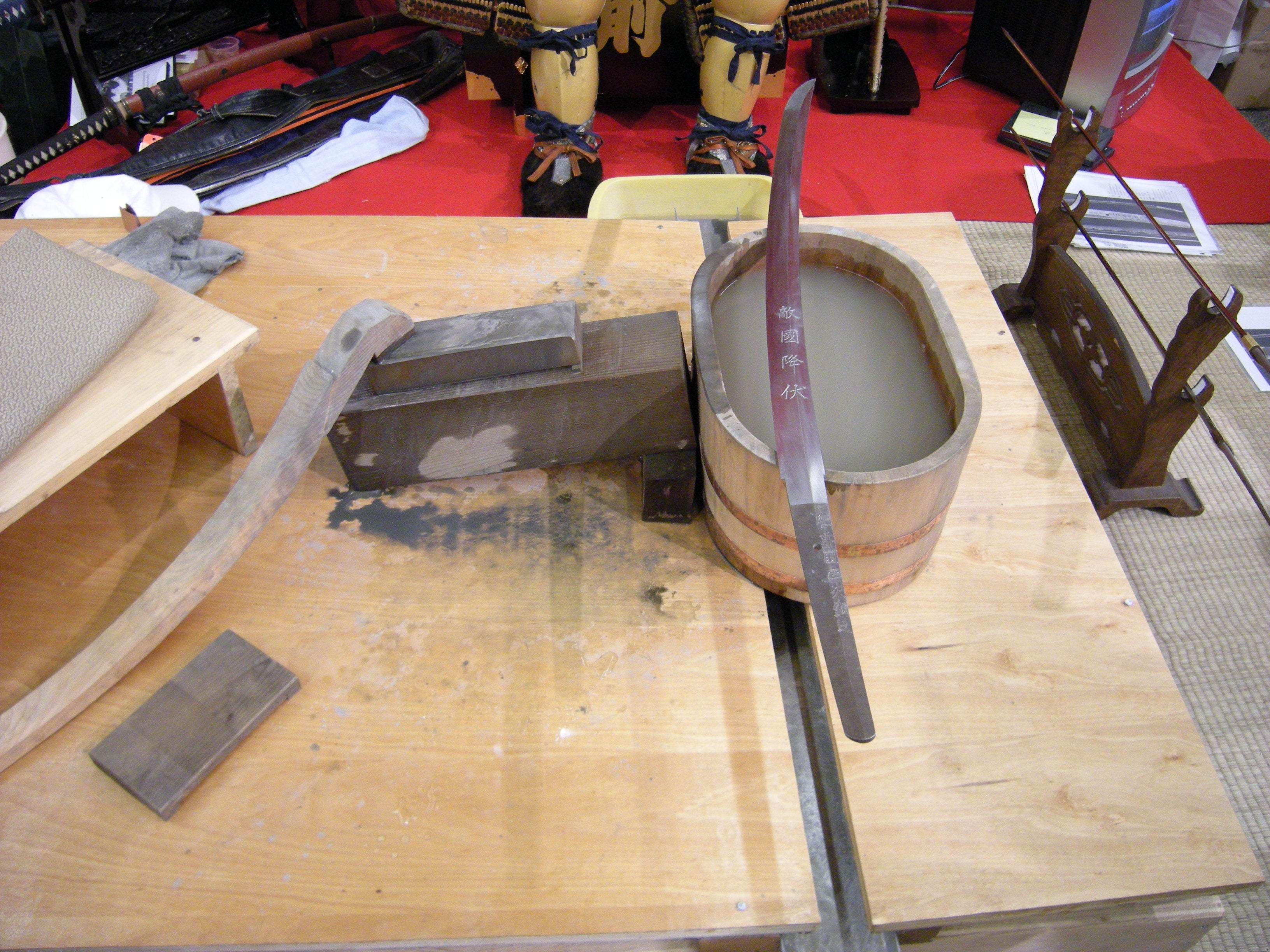

Traditional Japanese swords are prized for their unparalleled level of quality, versatility and attention to detail. For many centuries, they've been recognized as the world's highest quality swords -- something that isn't expected to change anytime soon. But while most people are familiar with Japanese bladesmithing practices like differential heat treatment, a lesser-known practice is the creation of a fuller.
What Is a Fuller?
A fuller, also known as a blood groove, is one or more indentions in a sword's blade. It typically runs the most or all the length of the blade and is found on both sides. From afar, it's difficult to determine if a sword has a fuller. It's not until you inspect the blade up close that you'll see the characteristic indentions of this feature.
Purpose of Fullers
So, what's the purpose of a fuller? Contrary to what some people believe, it wasn't to make swords more lethal. Rather, it was used to lighten them. According to some reports, swords with a fuller are up to 35% lighter than their counterparts without them. This is due to the fact that a fuller is essentially an area of the blade in which some -- not all -- of the metal is removed, thereby lowering the sword's weight. In turn, this allowed samurai warriors to carry and use the sword more efficiently.
Another common myth is that the presence of a fuller lowered the strength and durability of a Japanese sword. Although it didn't make swords stronger, fullers didn't make them weaker either.
Different Types of Fullers in Japanese Swords
Throughout the region's feudal period, Japanese swordsmiths created and used a variety of different fuller types, some of which include the following:

Who the Muramasa smiths really were, how their blades became linked to the Tokugawa family's misfortunes, and why historians treat the curse as legend.

What nagasa, sori, motohaba, kasane, tsuka length, weight and balance point mean, how each is measured, and how to compare two swords fairly.

What the habaki, tsuba, tsuka, menuki, fuchi, kashira and saya actually do, and how to choose each one when you design a custom katana. Illustrated with museum pieces from the Metropolitan Museum of Art.


