
Your Cart is Empty


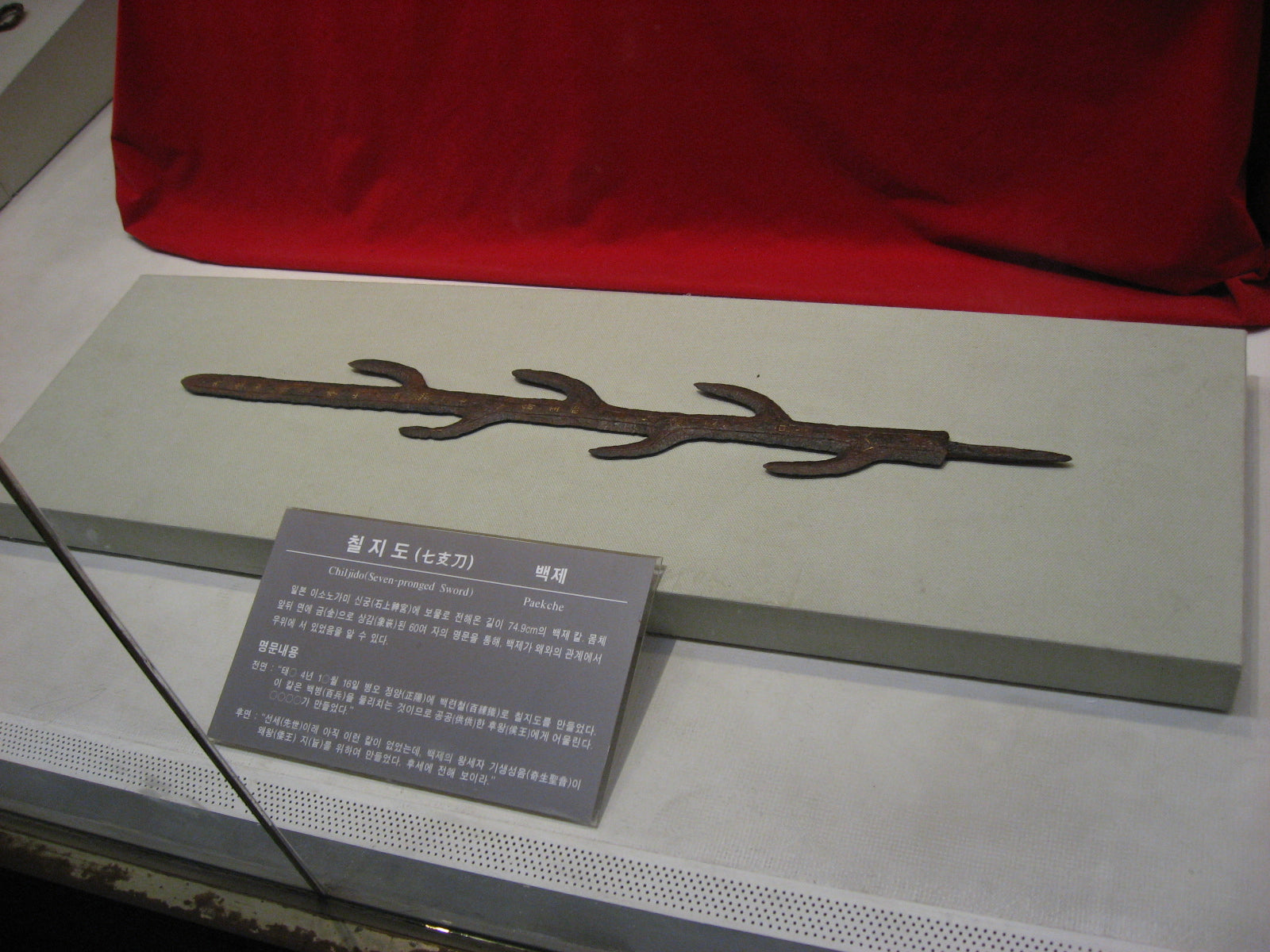

The Korean Peninsula has been instrumental in forging some of the world's finest. While the region first began importing swords from China and Japan during the Bronze Age, it wasn't until the mid-1st century when Korean started producing its own swords using native materials and craftsmanship practices. This spurred the development of several unique types of swords, some of which are described in this blog post.
The Seven-Branched Sword
As shown in the photo above, the Seven-Branched Sword isn't your typical sword. Rather, it was designed to be a gift for a Yamato ruler. According to Wikipedia, the Seven-Branched Sword featured a blade measuring 25.7 inches (65.5 cm). Unlike most swords of its time, it didn't feature a sharp edge. The Seven-Branched Sword actually featured seven initial branches (hence the name) and was used primarily for ceremonial purposes.
Geom
The term "geom" is often used to describe any traditional Korean sword. Technically, however, a geom is a short, straight-edged sword with one or two edges and a moderately blunt tip. It's very similar to the traditional Chinese jian, as both swords feature a short, straight-edged blade. The key difference between the geom and the Chinese jian, however, is that the latter features a blunt tip while the former features a sharp tip.
Ssango
The Ssango wasn't a single traditional Korean sword. It referred to two swords, specifically two long swords or two short swords. Many centuries ago, Korean warriors on horseback would carry two swords. The collective term used to describe the two swords wielded and used by the Korean horseback warriors was Ssango.
Janggeom
In Korea, the Janggeom refers to a long sword that was invented shortly after the Bronze Age. Not much is known about this sword. There are only a few mentions of the Janggeom in historical documents, most of which emphasize its long blade. Nonetheless, it's believed that the Janggeom was popular among Korean warriors, many of whom preferred it over short swords.
Samjeongdo
The Samjeongdo is a traditional Korean sword that was given to military generals. At the end of each year, Korea's Ministry of National Defense would give each of its military generals a Samjeongdo sword as a gift. These swords weren't used for combat but, instead, were kept as gifts.
These are just a few of the most popular and well-known styles of traditional Korean swords. The Korean Peninsula produced countless other swords and bladed weapons, including crescent blades, polearm weapons, knives and more.

The kris is a weapon, an heirloom and a sacred object. How to read its blade, how pamor patterns are made, who the empu are, and why UNESCO recognized it.

How to choose a sword for someone else: matching it to their art, sizing it without spoiling the surprise, useful extras, and lead times for custom work.

How to size an iaito for your height, weigh alloy against steel, judge the handle and fittings, and what to ask your sensei and the seller first.


