
Your Cart is Empty


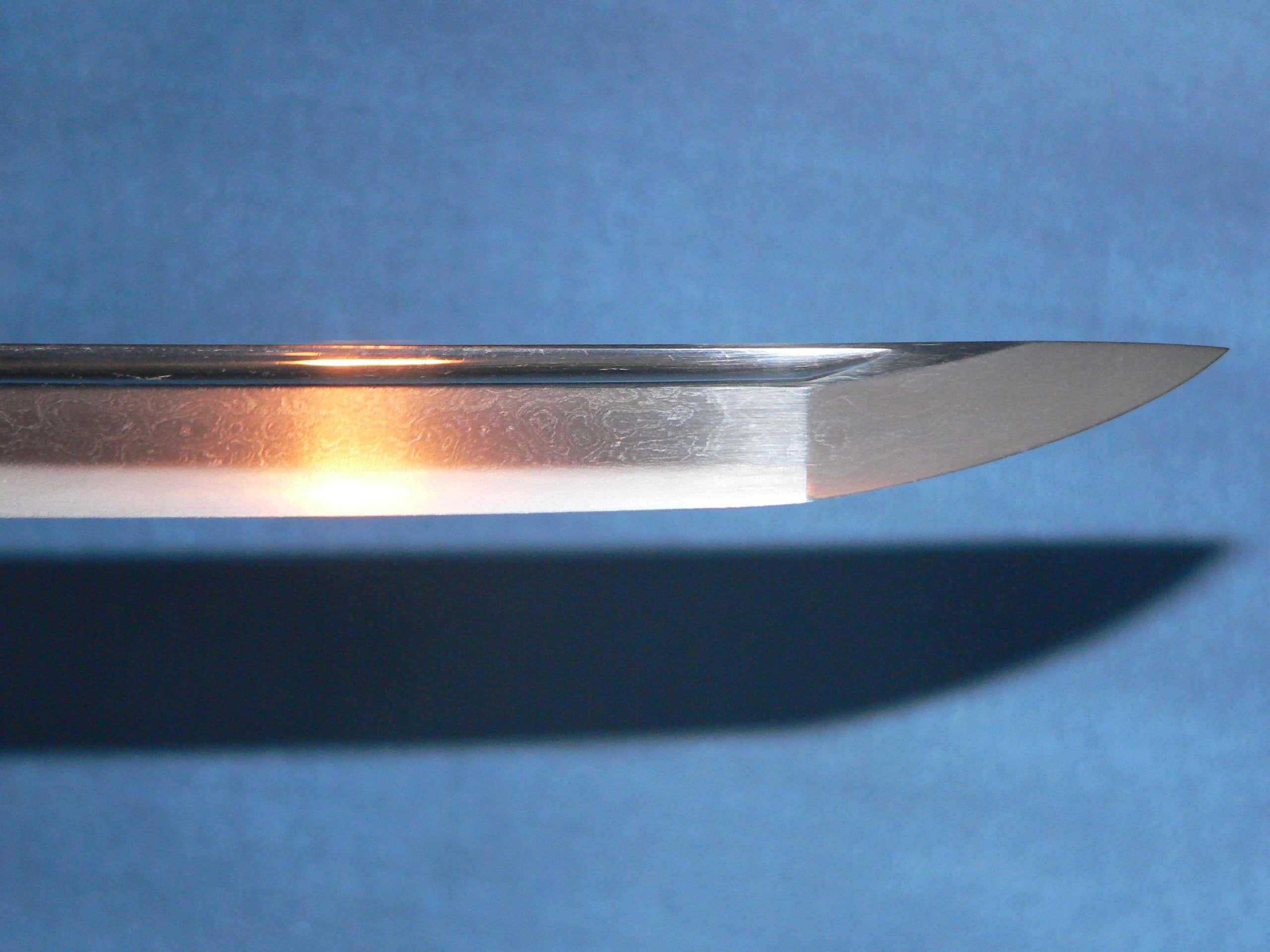

The katana is undoubtedly the most recognizable Japanese sword. Before it was invented, however, samurai warriors on the island nation wielded a different sword: the tachi. If it weren't for the tachi, perhaps the katana wouldn't have been invented.
About the Tachi
To the untrained eye, a traditional Japanese tachi may appear similar to a katana. They are both single-edged, two-handed swords with a curved blade. With that said, however, there some key differences between the two.
The tachi, for instance, was slightly longer with an average blade length of 27 9/16 to 31 1/2 inches (70 to 80 cm) compared to the katana's blade length of 23 1/2 inches (60 cm). Additionally, the tachi featured a more prominent curve with a smaller point area.
Another distinguishable difference between the tachi and the katana lies in the signature. In feudal Japan, swordsmiths would add their signature to the side of the sword's tang that would face outwards when worn by the samurai warrior. The tachi, however, was worn with the cutting edge facing down, whereas the katana was worn with the cutting edge facing up. As a result, the signature of the tachi was in the opposite location of the tang.
Origins of the Tachi
It's believed that Japanese swordsmiths began forging the tachi during the country's Koto period (900 to 1596). During this time, cavalry were a key element used in militaristic tactics -- and the tachi's design mirrors this fact. Unlike previous swords produced in Japan, the tachi featured a curved blade; thus, improving its efficiency and versatility on the battlefield. Samurai warriors on horseback could easily draw and use the tachi thanks to its curved blade.
Genuine tachi swords produced during feudal Japan were mounted in a tachi koshirae. The tachi koshirae featured two hangers that allowed the sword to be worn horizontally with the cutting edge facing down.
The Mongol Invasions of Japan, however, changed the way in which the tachi was made. The invading Mongols often wore boiled leather armor, which proved challenging for Japanese samurai warriors. Their swords and weapons would often struggle to penetrate the Mongols' thick armor. As a result, swordsmiths began to make the tachi with a thicker, wider blade.
The tachi remained the preferred weapon of Samurai warriors for centuries. Eventually, though, it was replaced with the katana. The katana was a more refined version of the tachi, featuring perfect specifications that ultimately allowed for a superior weapon.

How to size an iaito for your height, weigh alloy against steel, judge the handle and fittings, and what to ask your sensei and the seller first.

Toyotomi Hideyoshi's 1588 order to collect farmers' weapons: what the edict said, how it was carried out, and why historians see it as a change of status more than disarmament.

Where handle rattles come from, how to check safely, when a mekugi needs replacing, and when to stop using the sword.


