
Your Cart is Empty


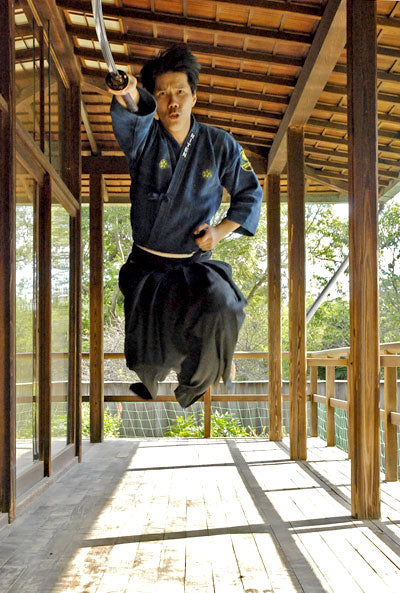

The terms "iaido" and "iaijutsu" are often used interchangeably when referring to traditional Japanese sword-drawing techniques. You'll find them spoken in Japan and other parts of the world today. So, what's the difference between iaido and iaijutsu?
Origins of Iaido
According to Wikipedia, iaido first appeared in the 1930s, during which several schools can began teaching the martial art to practitioners. With that said, the true origins of iaido can be traced back to Japan's feudal period. Back then, samurai warriors would practice unsheathing and drawing their sword before entering combat. This was particularly important when carrying a katana because of the unique way in which the katana was worn. While other traditional Japanese swords were worn with the cutting edge facing down, samurai warriors wore the katana with the cutting edge facing up. Therefore, they had to practice unsheathing and drawing it, thereby paving the way to iaido.
Origins of Iaijutsu
Iaijutsu, on the other hand, is believed to have appeared around the second century B.C. in Japan. Historians believe that iaijutsu originated as a concept of the bujutsu system for samurai warriors. Samurai warriors learned iaijutsu so that they could unsheathe and draw their swords -- typically swords with a single-edged, curved blade -- more quickly and efficiently. Over time, this practice took on a life of its own, with many martial arts schools teaching iaijutsu to samurai warriors so that they could better defend themselves on the battlefield.
The Difference Between Iaido and Iaijutsu
Both Iaido and Iaijutsu focus on unsheathing and drawing a sword, typically a katana or similar singled-edged sword with a curved blade. The main difference, however, is that iaijutsu is part of a broader, more wide-reaching school of Japanese martial arts. When looking at the name, "iaijutsu" is affixed with the word "jutsu," which means "to study" or "the study of." Therefore, iaijutsu and other words with the "jutsu" prefix are typically associated with entire schools of martial arts. In comparison, iaido is often practiced alone and without any guidance from a specific school of martial arts.
In Conclusion
The difference between iaido and iaijutsu is subtle at best. Both martial arts involve unsheathing and drawing a sword. Iaijutsu, however, is an older concept that specifically involves teachings from a martial arts school, whereas iaido does not. Other than this nuance, the two terms are pretty much the same.

Toyotomi Hideyoshi's 1588 order to collect farmers' weapons: what the edict said, how it was carried out, and why historians see it as a change of status more than disarmament.

Where handle rattles come from, how to check safely, when a mekugi needs replacing, and when to stop using the sword.

Around 170 Viking-age blades bear the name Ulfberht. Microscope studies show some were made of crucible steel and many were copies. Here is what we know.


