
Your Cart is Empty


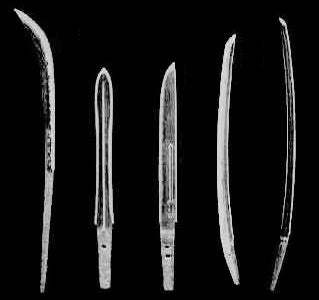

Japan has a long history of bladesmithing dating back to the Bronze Age, during which bladesmiths here created bronze swords and other bladed weapons by pouring molten bronze into pre-cut molds. Later, Japanese bladesmiths began using iron and steel to produce swords, eventually leading to some of the world's finest swords like the katana and wakizashi. When researching traditional Japanese swords, however, you may discover some of them referred to as "tou" and others referred to as "ken." So, what's the difference between traditional Japanese tou and ken swords?
Overview of Traditional Japanese Tou Swords
Contrary to what some people believe, tou isn't a specific type of traditional Japanese sword. Rather, it refers to all traditional Japanese swords that feature a single-edged blade. This has long been the most popular design used in traditional Japanese swords. Swords with a single-edged blade are generally stronger and more resilient because they have a thick spine. The side of the blade opposite to the sharp side is thicker -- the spine -- is designed with thick steel, which increases the sword's strength and stability.
Overview of Traditional Japanese Ken Swords
While tou swords are characterized by a single-edged blade, ken swords are characterized by a double-edged blade. Double-edged swords weren't as common in feudal Japan than single-edged swords. Nonetheless, bladesmiths still produced a variety of them, and many samurai warriors still used them in combat. Ken swords were considered more dangerous to use than tou swords due to their double-edged blade. Improper handling or use of a ken sword could result in self-injury.
Why Tou Became the Dominant Style
If you look at examples of the most popular traditional swords, you'll probably discover that most them are designed with a single-edged blade. Known as the tou style, it's become the dominant way in which Japanese swords are produced. Even today, most bladesmiths in Japan produce their swords with a single edge rather than two edges.
The popularity of the tou style can largely be attributed to the unique properties of these swords. With a single edge, bladesmiths can design swords with a thick spine, which as previously mentions, provides additional strength and stability for the sword. Furthermore, using a single edge makes swords easier to maintain. With double-edged swords, collectors and martial arts practitioners must sharpen two edges. With single-edged swords, they only have to sharpen a single edge.

The kris is a weapon, an heirloom and a sacred object. How to read its blade, how pamor patterns are made, who the empu are, and why UNESCO recognized it.

How to choose a sword for someone else: matching it to their art, sizing it without spoiling the surprise, useful extras, and lead times for custom work.

How to size an iaito for your height, weigh alloy against steel, judge the handle and fittings, and what to ask your sensei and the seller first.


