
Your Cart is Empty


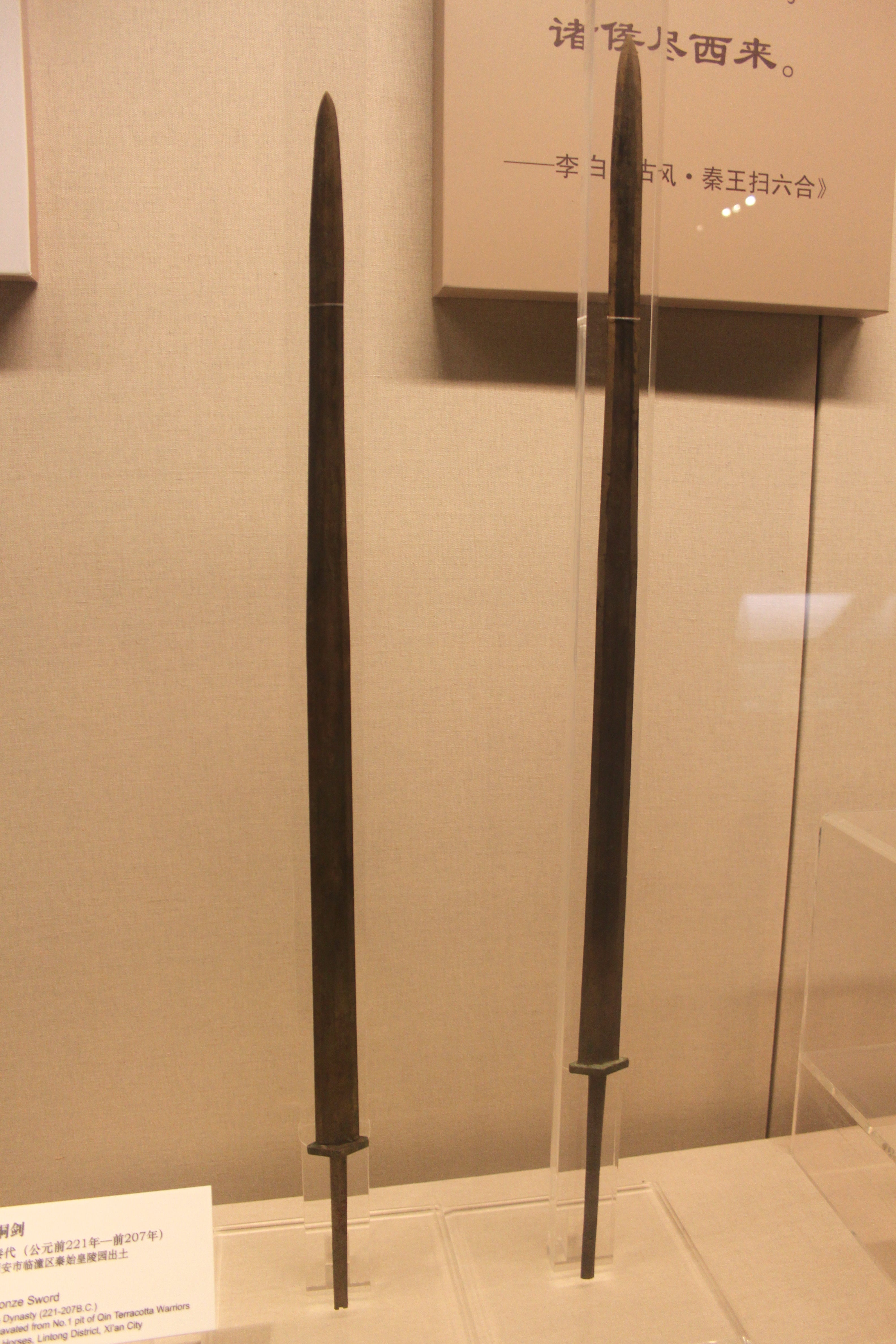

Traditional Chinese swords are classified as either jian or dao. The jian first appeared in China during 13th century B.C., while the dao appeared during China's Song dynasty (960 to 1279). Both types of swords have played a pivotal role in the country's history, providing warriors with the weapons needed to defend their land from invading forces. But while the share some common characteristics, the jian and dao are two unique types of swords. So, how exactly does the jian differ from the dao?
Straight vs Curved Blade
As shown in the photo here, the jian features a straight blade. This is one of the defining characteristics of this style of traditional Chinese swords. All jians have a straight blade that runs vertically without curving to either side. In comparison, all or most dao have a curbed blade.
Initially, all Chinese swords, including the jian, were designed with a straight blade. Chinese bladesmiths soon discovered, however, that using a curved blade allowed for a superior level of versatility. With a curved blade, the dao and similar swords were able to flex somewhat under pressure, thereby protecting them from damage. This ultimately paved the way for newer and more effective swords, and there's even some belief that curved Chinese swords like the dao influenced Japan's bladesmithing practices, paving the way for world-renowned swords like the katana and wakizashi.
Single vs Double-Edged Blade
Another key difference between the Chinese dao and jian is that the former features a single-edged blade, whereas the latter features a double-edged blade. In other words, both ends of the jian's blade are sharpened to a razor-sharp edge. With the dao, only a single end of the blade is sharpened. The other end of the blade remains dull.
With two edges instead of one, the dao was more difficult to maintain. Rather than sharpening just one edge, warriors were forced to sharpen two edges. Furthermore, the use of two edges increased the risk of damage to the sword upon impact. This promoted Chinese bladesmiths to invent the dao, which featured a single-edged blade.
To recap, there are two primary differences between the Chinese dao and jian. The jian features a straight blade, whereas the dao features a curved blade. And the jian's blade has two edges, whereas the dao's blade has a single edge. There are countless different types of jian and dao, but they all share these defining characteristics.

The kris is a weapon, an heirloom and a sacred object. How to read its blade, how pamor patterns are made, who the empu are, and why UNESCO recognized it.

How to choose a sword for someone else: matching it to their art, sizing it without spoiling the surprise, useful extras, and lead times for custom work.

How to size an iaito for your height, weigh alloy against steel, judge the handle and fittings, and what to ask your sensei and the seller first.


