
Your Cart is Empty


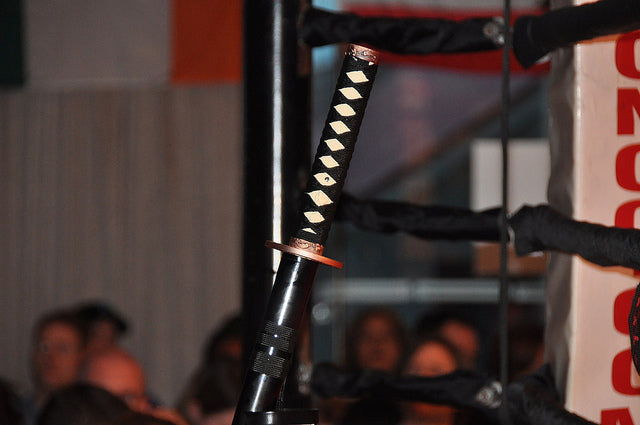

The katana and wakizashi are two of the most popular traditional Japanese swords. They both originated in feudal Japan following the advent of the smaller tanto. So, what's the difference between these two traditional Japanese swords?
The Katana Came First
The katana was actually invented before the wakizashi. Some of the first documented reports of the katana date back to Japan's Kamakura period (1185 to 1333), during which swordsmiths began making longer, stronger swords to overcome the hard-boiled leather armor worn by the invading Mongol forces. With its curved blade, high-carbon steel and the way in which it was carried (cutting edge facing up), the katana proved instrumental in Japan's defense of the invading Mongols.
The wakizashi, on the other hand, didn't appear until the 15th or 16th century. This, of course, means it's several hundred years older than the katana.
The Katana is Longer
Perhaps the greatest difference between the katana and the wakizashi is the length. While there are always exceptions, most wakizashi featured a blade length of 12 to 24 inches (30 to 60 cm), whereas the katana featured an average blade length of 23 5⁄8– 28 3⁄4 in (60 to 73 cm).
With a longer blade, the katana was unmatched in terms of strength of performance. It allowed samurai warriors to engage their opponents from a safe distance. Whether infantry or cavalry, samurai warriors could protect themselves from danger while using the katana. The wakizashi, because it was smaller, was typically used only in close-quarter combat. If a samurai warrior was attacked in a building, he could quickly pull out his wakizashi to defend himself.
The Wakizashi Was a Backup Sword
Another key difference between the katana and wakizashi involves the way in which they are used. In feudal Japan, samurai warriors were required by law to carry two swords, a process known as daisho. This included a primary sword as a well as a secondary backup sword.
But only the katana was used as a primary weapon. The wakizashi was used as a secondary backup weapon, with some samurai warriors carrying them both. In fact, it was an official sign of the samurai when an individual carried the katana and wakizashi.
Other than these slight nuances, the katana and wakizashi were relatively the same. They both featured a single, curved edge; they were both made of high-carbon steel; and they both used similar mountings.

Toyotomi Hideyoshi's 1588 order to collect farmers' weapons: what the edict said, how it was carried out, and why historians see it as a change of status more than disarmament.

Where handle rattles come from, how to check safely, when a mekugi needs replacing, and when to stop using the sword.

Around 170 Viking-age blades bear the name Ulfberht. Microscope studies show some were made of crucible steel and many were copies. Here is what we know.


