
Your Cart is Empty


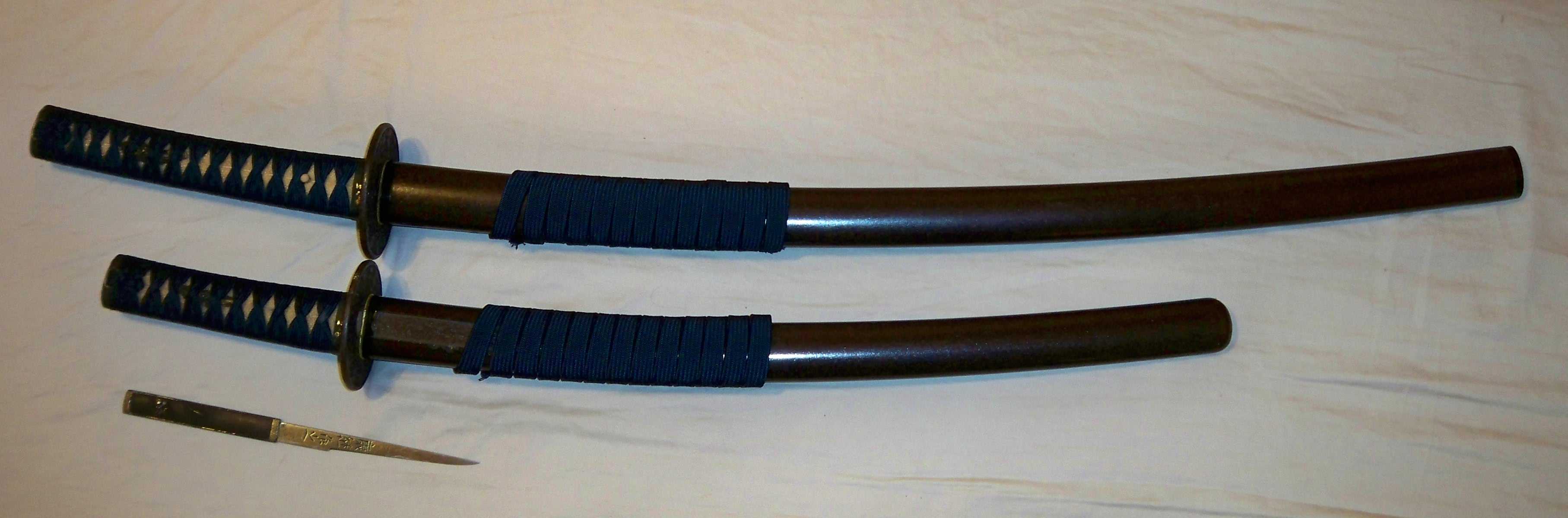

It wasn't uncommon for samurai warriors to carry and store their swords in a special housing accessory. Rather than wearing a katana with a live blade directly around their waist using a sash (obi), for example, they typically placed the katana in an ornate mounting known as a koshirae, after which the koshirae was worn around their waist. However, samurai warriors in feudal Japan also used a shirasaya to protect their swords from damage. And while koshirae and shirasaya may look similar, they are two unique accessories with their own purpose. So, what's the difference between a koshirae and shirasaya exactly?
Koshirae
A koshirae is an ornate mounting in which Japanese swords were placed when worn by a samurai warrior. Back in feudal Japan, samurai warriors were required by law to carry a sword at all times. In fact, the law actually required them to carry swords: a large sword and a smaller companion sword. While the law didn't require them to store or carry these swords in a specific manner, most samurai warriors would place them inside koshirae.
Koshirae were most commonly made of lacquered wood. They were handcrafted using locally harvested wood and shaped to fit the samurai warrior's preferred sword. With most samurai warriors carrying two swords, they generally wore two separate koshirae. The wooden koshirae were placed around their wast on an obi, allowing them to quickly unsheathe and draw their swords for combat purposes.
The Japanese government had specific rules regarding the way in which samurai warriors wore their koshirae. During Japan's Edo period, for example, samurai warriors were required to wear their koshirae with the hilt of their sword on their right-hand side if there was an active war. If it was a time of peace, samurai warriors were required to wear their koshirae with the hilt of their sword on their left-hand side.
Shirasaya
A shirasaya, on the other hand, is an undecorated mounting in which traditional Japanese swords were stored when they weren't being worn or used. The fundamental difference between a koshirae and shirasaya is that the former was designed to be worn by samurai warriors, wheres the latter was designed simply for storing a samurai warrior's sword when he wasn't carrying or using it.
Another difference between a koshirae and shirasaya is aesthetics. Koshirae were typically designed with an emphasis on aesthetics. They were made with ornate markings and decorations to create a more striking appearance. In comparison, shirasaya featured a more basic design consisting of few or no ornate marketing and decorations.

The kris is a weapon, an heirloom and a sacred object. How to read its blade, how pamor patterns are made, who the empu are, and why UNESCO recognized it.

How to choose a sword for someone else: matching it to their art, sizing it without spoiling the surprise, useful extras, and lead times for custom work.

How to size an iaito for your height, weigh alloy against steel, judge the handle and fittings, and what to ask your sensei and the seller first.


