
Your Cart is Empty


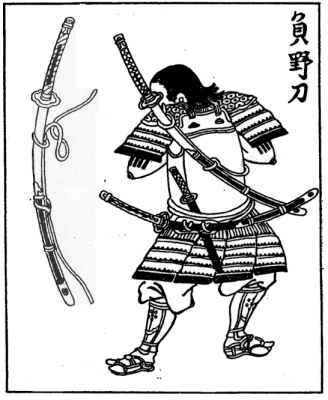

Very rarely were swords worn directly against a person's body. Normally, they were placed in a long sheath, after which the sheath was worn on the person's waist or back. Known as a scabbard, this accessory proved vital for several reasons. To learn more about sword scabbard and how they work, keep reading.
Protects Against Self-Injury
One of the reasons for placing swords in a scabbard is to protect against self-injury. Even back in feudal Japan, samurai warriors would carry swords like the katana in a scabbard. These scabbards were usually made of lightweight wood and painted with a lacquer coat on the outside. With the blade placed in the scabbard, however, samurai warriors were less likely to accidentally injure themselves when drawing, using or carrying their sword.
Protects Sword From Damage
In addition to protecting against self-injury, scabbards also protect the sword from damage. The performance of a sword relies heavily on the structural integrity of its blade. If the blade becomes chipped or otherwise damaged, it won't cut as efficiently as it should. Storing a sword in a scabbard helps to protect the blade from damage. This is one of the reasons why Japanese samurai warriors stored their swords in scabbards made of lightweight wood. The wood was light enough so that it didn't damage the blade. In fact, samurai warriors had to be cautious when drawing their sword to avoid cutting into the scabbard.
How They Were Made
There are countless techniques used to make scabbards. In feudal Japan, woodworkers would carve these sword sheaths out of whole blocks of lightweight wood. Using just a single block of a wood, a woodworker could carve several scabbards for use in swords like the katana, wakizashi or tanto.
While most scabbards produced in feudal Japan were made of wood, those produced in other regions were often made of other materials. Leather was an alternative material used to make scabbards. Brass and steel were also used to make scabbards in Europe beginning in the 19th century. The advent of metals such as these paved the way for a stronger scabbard design, with metal eventually surpassing leather and wood . But lightweight wood remains the most popular material for traditional Japanese sword scabbards.
Today, scabbards are still used for holding swords, and they still serve the same basic purpose of protecting the blade from damage and protecting the user from self-injury.

Who the Muramasa smiths really were, how their blades became linked to the Tokugawa family's misfortunes, and why historians treat the curse as legend.

What nagasa, sori, motohaba, kasane, tsuka length, weight and balance point mean, how each is measured, and how to compare two swords fairly.

What the habaki, tsuba, tsuka, menuki, fuchi, kashira and saya actually do, and how to choose each one when you design a custom katana. Illustrated with museum pieces from the Metropolitan Museum of Art.


