
Your Cart is Empty


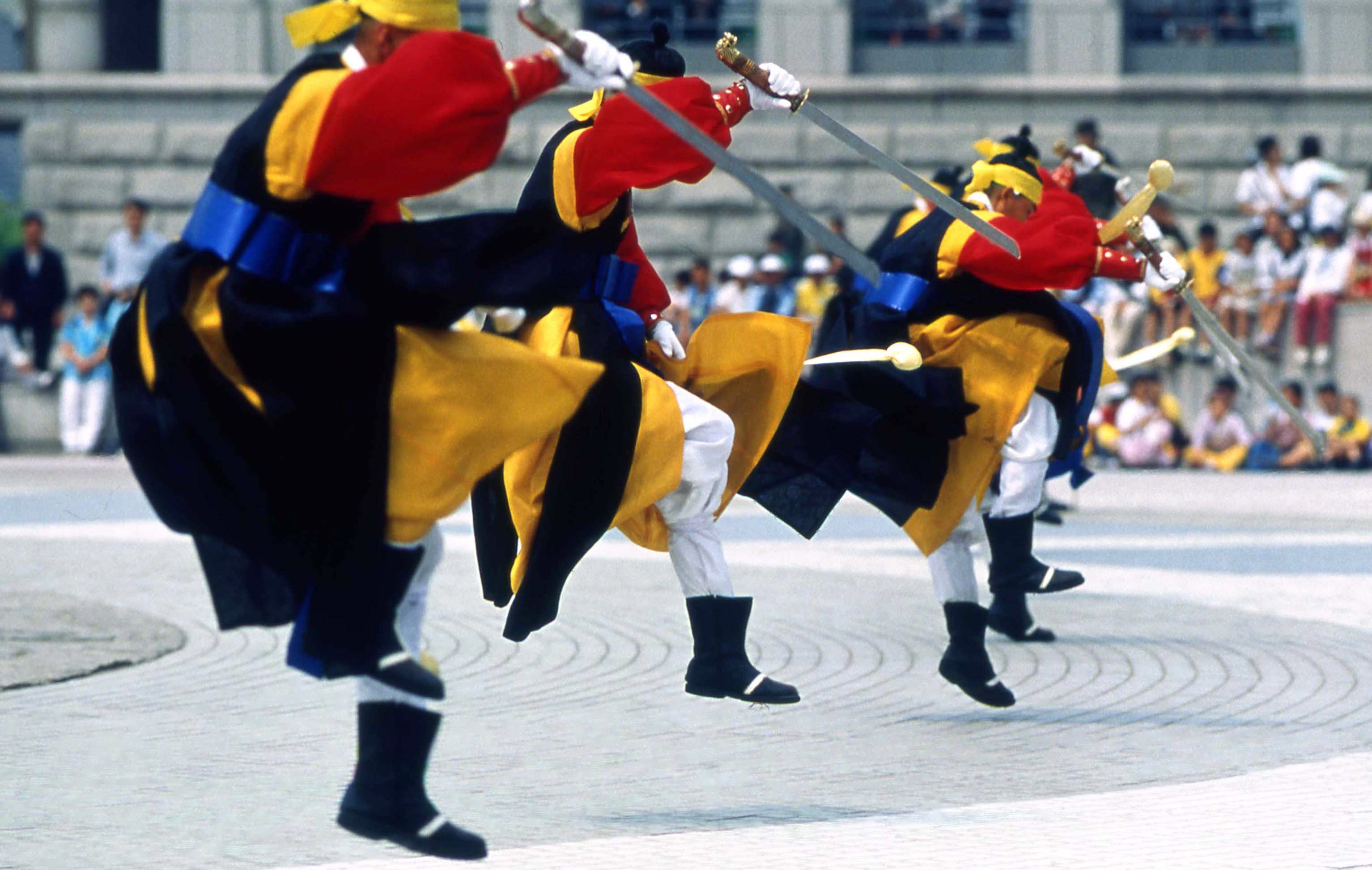

The Korean Peninsula has spawned a variety of martial arts, some of which include Taekwondo, Taekyyon, Subak, Tang Soo Doo, Soo Bahk Doo and Gungdo. While most of these martial arts focus on combat maneuvers, either with or without a weapon, some are designed strictly for artistic purposes. Geommu is one such form of traditional Korean martial arts that's experienced a resurgence of popularity in recent years.
What Is Geommu?
Geommu is a traditional Korean martial art that involves orchestrated dances. These aren't your typical dances, however. As shown in the image above, practitioners of Geommu carry large swords while wearing vibrantly colored outfits. Geommu is often performed as part of a ceremony or celebration, with many modern dances now incorporating music.
It may sound simple enough, but there's a methodical process to performing Geommu. Practitioners must learn to dance so that their costume moves harmoniously with their body. When a practitioner dances, it causes their costume to move. To achieve proper form, practitioners dance in a way that synchronizes their body movements with their costume movements -- all while wielding a sword (or two swords).
History of Geommu
It's unknown exactly when Geommu was invented or who created it. According to legend, however, the martial art originated sometime during the latter half of the Three Kingdoms Periods. This was a critical time for the Korean Peninsula, as the region was divided into three areas, each of which was ruled by a different leader. Legend has it that the king of one of these areas invited a boy to his kingdom, and this boy introduced the people to the Geommu.
Whether the story is true or not remains open for debate, but most historians agree that Geommu was likely invented during Korea's Three Kingdoms Periods, probably around 660 A.D.
Geommu Today
Even after all these years, you'll still see people performing Geommu on the streets of Korea today. Unfortunately, some elements of this traditional martial art have faded from history. In 1962, the South Korean government formed the Cultural Properties Protection Act, which was designed to protect historic martial arts like Geommu.
Geommu isn't your traditional swordsmanship-based martial art. Although it requires the use of a sword, it's more a dance and less of a combative practice. Nonetheless, geommu is a historically significant Korean martial art that's caught the attention of millions of people.

The kris is a weapon, an heirloom and a sacred object. How to read its blade, how pamor patterns are made, who the empu are, and why UNESCO recognized it.

How to choose a sword for someone else: matching it to their art, sizing it without spoiling the surprise, useful extras, and lead times for custom work.

How to size an iaito for your height, weigh alloy against steel, judge the handle and fittings, and what to ask your sensei and the seller first.


