
Your Cart is Empty


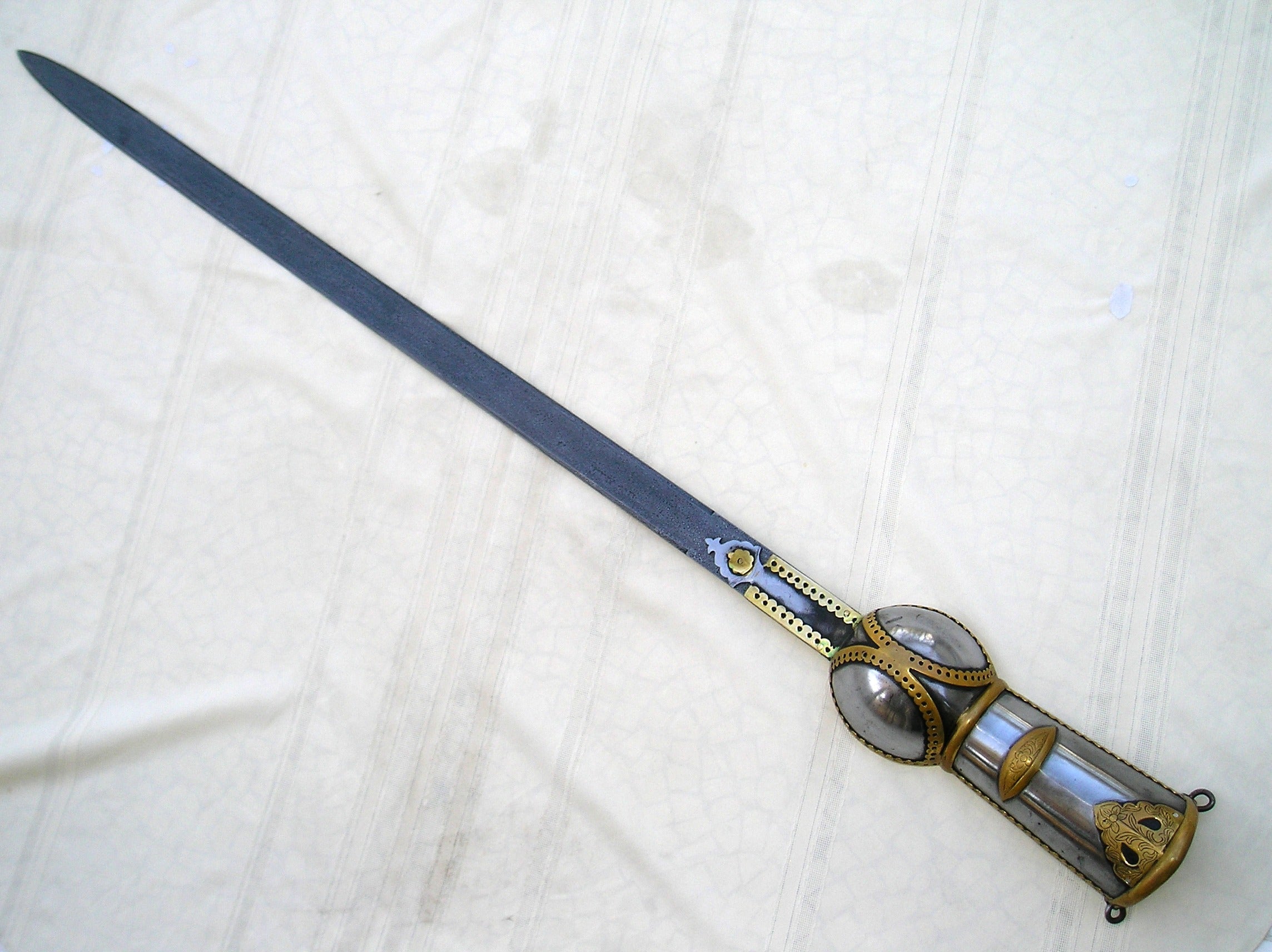

Have you heard of the pata? Also referred to as patta -- as well as the gauntlet-sword in English -- the pata is a traditional straight-edged sword that originated from the Indian subcontinent. As shown in the image here, it features a unique appearance that's characterized by a gauntlet-style handguard. To learn more about the traditional Indian pata and the history behind this unique sword, keep reading.
Origins of the Pata
The pata originated sometime during the Mughal Period in India. According to Wikipedia, however, it wasn't until the 17th and 18th centuries when the pata became a regular weapon used in warfare. During this time, the Maratha Empire became the governing entity that ruled most of India. The Maratha Empire acknowledged the pata as being a powerful sword that was particularly effective against armored cavalry. As such as, the pata was supplied to soldiers in the Indian army, resulting in a high level of use and popularity for this traditional Indian sword.
Description of the Pata
Although it was made of steel, the pata didn't share many similarities of other traditional swords. While other swords typically featured a single edge, the pata featured two edges, meaning both sides of the blade were sharpened to make the sword more lethal. The downside to using a dual-edge design such as this is that it makes the sword more difficult to maintain. With both edges being sharp, soldiers were forced to sharpen and maintain two edges instead of just one.
So, how long was the pata? The length of the pata varied depending on the specific time and the person who made it. With that said, most pata featured a blade length of about 10 to 44 inches. Of course, that's substantially shorter than many other swords produced during that period.
Perhaps the most notable characteristic of the pata is its gauntlet-like handguard. The handguard wasn't just a circular- or square-shaped piece of metal separating the blade from the handle. Rather, it was designed like a protective glove in which the user placed his or her hand.
How the Pata Was Used
Because of its short- to medium-sized length, the pata was generally paired wither another weapon. Some soldiers actually carried two pata -- one in each hand -- when preparing for battle. Other soldiers would carry a pata and a shield. When wielded, the pata was used like many other swords of its time. Depending on the situation, soldiers would use the pata to perform slashing and cutting attacks. The straight, non-curved design of the pata limited its utility as a thrusting weapon. However, this design made it better at performing slashing and cutting attacks.

The kris is a weapon, an heirloom and a sacred object. How to read its blade, how pamor patterns are made, who the empu are, and why UNESCO recognized it.

How to choose a sword for someone else: matching it to their art, sizing it without spoiling the surprise, useful extras, and lead times for custom work.

How to size an iaito for your height, weigh alloy against steel, judge the handle and fittings, and what to ask your sensei and the seller first.


