
Your Cart is Empty


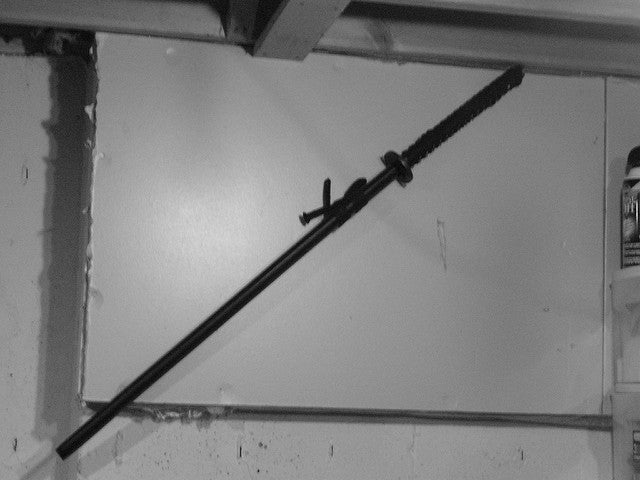

The Tenka-Goken refers to five specific Japanese swords, three of which are considered National Treasures by the country and one is a holy relic of Buddhism. Nonetheless, they are all considered to be the finest quality swords ever produced in Japan.
#1) Dōjigiri
Forged by famous bladesmith Hōki-no-Kuni Yasutsuna, the Dōjigiri is one of the oldest swords to feature the katana's characteristic design. With its moderate length and curved blade, it paved the way for a new era of Japanese swordmaking. Additionally, the Dōjigiri's overall quality and attention to detail is unparalleled, even when compared to modern swords.
#2) Onimaru
Meaning "Demon," the Onimaru was one of three swords owned by members of Ashikaga clan. There's a Japanese legend stating that the sword killed an oni demon. Because of this legend, the sword has been given the name "Onimaru." In terms of size, the Onimaru measured about 30 inches (78.4 cm).
#3) Mikazuki
Forged by Japanese bladesmith Sanjō Kokaji Munechika in the 10th to 11th century, the Mikazuki is said to have been graced by the god Inari. It features a crescent-shaped blade with a strong curvature of 2.7 cm. The Mikazuki is now considered a National Treasure and is owned by the Tokyo National Museum.
#4) Ōdenta
Meaning "Great Denta," the Ōdenta was forged by Japanese bladesmith Miike Denta Mitsuyo during the country's feudal person. Like the Onimaru, it's also considered to be a National Treasure of Japan. According to legend, the Ōdenta healed a women who was in pain. Another legend says the sword warded off birds that attempted to approach it.
#5) Juzumaru
Finally, the Juzumaru is a traditional Japanese sword produced by bladesmith Aoe Tsunetsugu. With a length similar to the Onimaru, it's a medium-sized blade that's become well known through Japan. According to legend, the Buddhist prist Nichiren adorned the Juzumaru with rosary during the country's Kamakura period (1185 to 1333). Because Nichiren was believed to be the reincarnation of Visistacarita, the Juzumaru became a prized treasure.
The five aforementioned swords define the Tenka-Goken. It's unclear, however, exactly when people began referring to these collective swords as "Tenka-Goken." There are books referring to them as "Tenka-Goken" that date back to Japan's Muromachi period (1336 to 1573). Therefore, many historians believe the term originating during or around this period.

Who the Muramasa smiths really were, how their blades became linked to the Tokugawa family's misfortunes, and why historians treat the curse as legend.

What nagasa, sori, motohaba, kasane, tsuka length, weight and balance point mean, how each is measured, and how to compare two swords fairly.

What the habaki, tsuba, tsuka, menuki, fuchi, kashira and saya actually do, and how to choose each one when you design a custom katana. Illustrated with museum pieces from the Metropolitan Museum of Art.


