
Your Cart is Empty


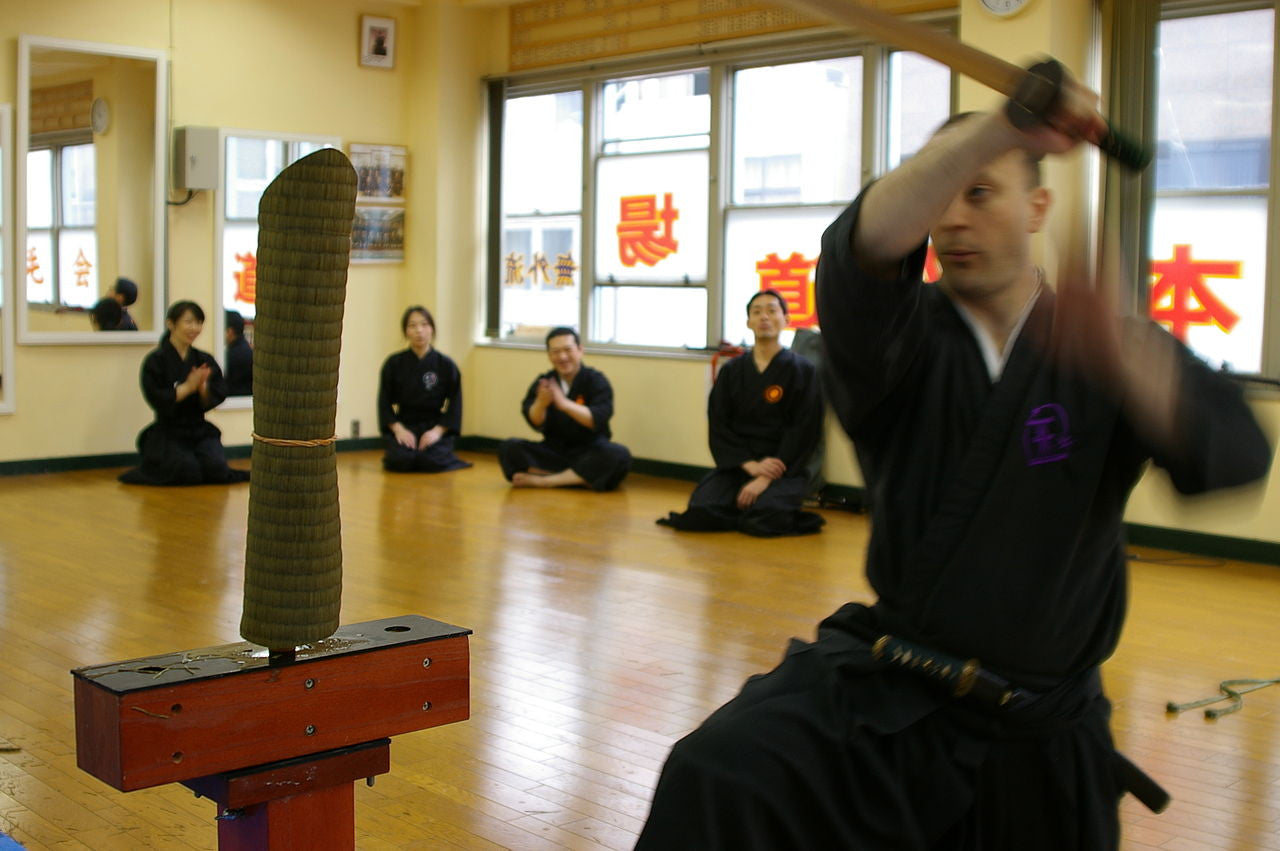

Originating during Japan's Edo period (1603 to 1868), tameshigiri is a form of martial arts in which the practitioner cuts one or more targets using a sword.
Origins and History of Tameshigiri
Historians have traced tameshigiri back to Japan's Edo period, during which swordsman were asked to test newly created swords. After a swordsmith finished forging a sword, he would ask one of the most proficiently skilled swordsman to test it.
Being that only the very best swordsman were allowed to test new swords, this eliminated "skill" as a variable in how well the sword performed. If a sword failed to cut efficiently and fluidly through the target, it would be given back to the swordsmith for modification.
Back then, swordsmen would practice cutting on a wide range of targets, some of which included bamboo, thin steel sheets, rice straw, and even cadavers.
The Evolution of Tameshigiri
While it still focuses on the same basic principle of cutting targets with a sword, tameshigiri has since evolved by introducing new elements into the art. The biggest change is that it now focuses on the practitioner's abilities instead of the sword's abilities. In the past, tameshigiri was performed to test the performance of a new sword. Today, it's performed to test the swordsmanship and proficiency of martial arts practitioners.
For targets, most modern practitioners of tameshigiri use tatami omote mats, which are rolled up into a cylinder shape. This allows the grain of the mat to flow vertically, improving the ease at which the practitioner can cut through the material.
There are several factors that affect a practitioner's ability to cut through the target. For starters, thicker targets require greater strength and swordsmanship proficiency than thinner targets. As noted above, the direction of the target's grain can also affect a practitioner's performance in tameshigiri. And lastly, factors of the sword itself -- quality of steel, blade sharpness, blade length -- can how difficult it is for the practitioner to cut through the target.
Common Target Configurations for Tameshigiri

What the habaki, tsuba, tsuka, menuki, fuchi, kashira and saya actually do, and how to choose each one when you design a custom katana. Illustrated with museum pieces from the Metropolitan Museum of Art.