
Your Cart is Empty


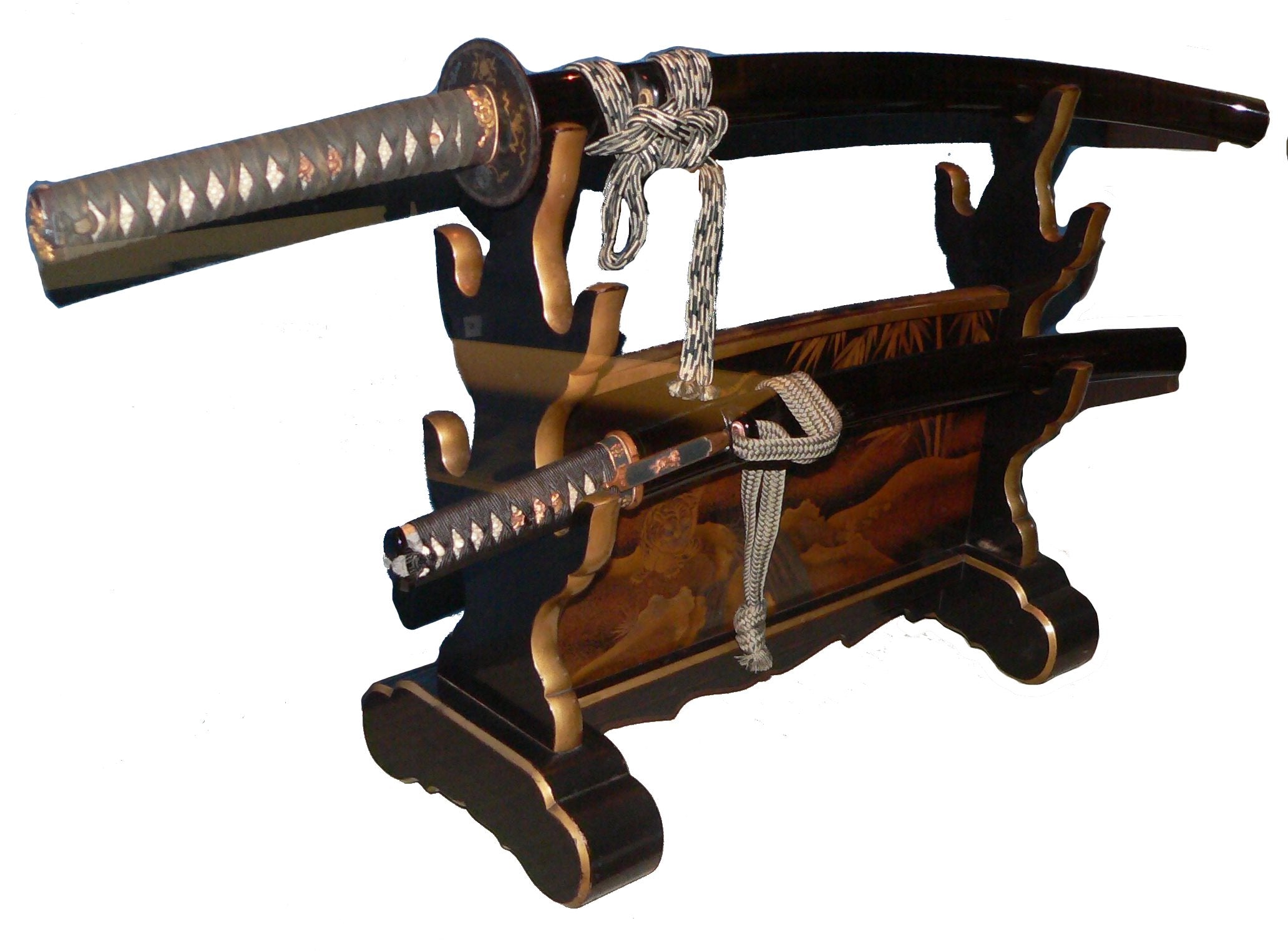

Meaning "big little," daisho has been a key principle of the samurai code for centuries. Since the country's feudal period, samurai warriors have embraced this concept in their daily lives. Upon hearing the term "daisho," though, you may assume that it's just another traditional Japanese sword, but this isn't necessarily true. To learn more about daisho and the history surrounding this concept, keep reading.
Daisho Is the Act of Carrying Two Swords
Daisho doesn't refer to a specific sword. Rather, it refers to the act of carrying two swords: a large and small sword. Samurai warriors in feudal Japan discovered that carrying a large sword and a small sword gave them a competitive advantage over their enemies on the battlefield. As a result, samurai warriors were actually required to carry two swords on them, a practice known as daisho.
Origins of Daisho
The concept of carrying two swords has origins dating back to Japan's Muromachi Period (1336 to 1573). Back then, it was customary for samurai warriors to carry a short sword like the tanto -- which is more of a knife due to its short blade size -- as well as a long sword like the tachi. Following the Muromachi Period, samurai warriors began carrying an uchigatana with a smaller companion-sized uchigatana. It wasn't until the Kumakara Period, however, when samurai warriors began carrying the katana with a smaller sword like the tanto.
The Rise of Daisho
Daisho was an instrumental in Japan's history, as allowed samurai warriors to engage their enemies in a variety of scenarios. When a samurai warrior was fighting on an open field or landscape, he would likely use his long sword to engage enemies. When a samurai warrior was fighting indoors, on the other hand, he would use his small sword. By carrying both types of swords, samurai warriors could choose the right weapon for their specific needs.
Daisho was so important, in fact, that in 1629 required samurai warriors to carry a large sword and a small sword while on official duty. If a samurai warrior was only carrying one sword, whether large or small, he was technically breaking the law at the time.
Around of the end of the 16th century, daisho began to fade from the limelight. The sword hunt of Toyotomi Hideyoshi prohibited citizens from carrying two swords while subsequently restricting this act to samurai warriors. This ultimately paved the way for the end of daisho, though the concept is still rooted in Japan's history.

What the habaki, tsuba, tsuka, menuki, fuchi, kashira and saya actually do, and how to choose each one when you design a custom katana. Illustrated with museum pieces from the Metropolitan Museum of Art.