
Your Cart is Empty


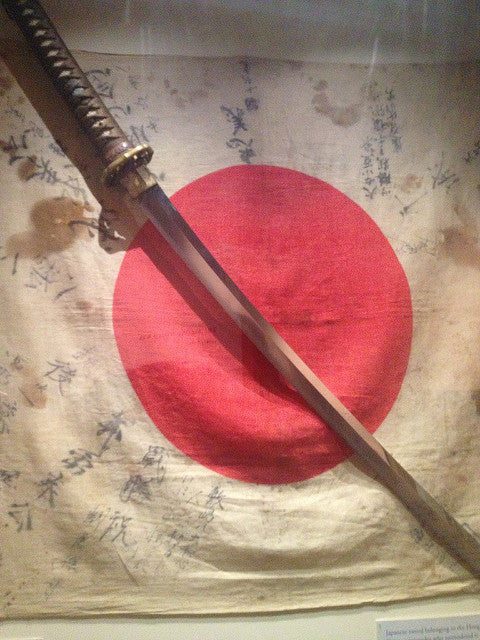
 Are you looking to buy a new sword? Whether you're a collector or martial arts practitioner, buying a new sword is a big decision. To help you find the best sword for your needs, you should avoid making the following mistakes.
#1) Overlooking Country of Origin
Arguably, one of the most important things to consider when buying a sword is its country of origin. In other words, where was the sword manufactured? Chinese swords are typically the cheapest, but this is one instance in which the saying, "You get what you pay for," holds true. Korean and Japanese swords offer a superior level of quality than their Chinese counterpart.
#2) Choosing a 'Decorative' Sword
If you plan on using your sword -- even for nothing more than chopping bamboo -- you should avoid buying a decorative sword. Swords are typically classified as either decorative or functional. While both are typically made of steel, decorative swords are mass-produced with cheap materials and equally poor craftsmanship. They make great decorative pieces for the home or office, but they aren't suitable to use for cutting.
#3) Choosing the Wrong Steel
Different swords are made with different types of steel, which can affect its performance and overall quality. Stainless steel, for instance, is an alloy containing both iron and chromium (at least 10.5%). Chromium creates a barrier around the iron, protecting it from moisture and oxygen, which would otherwise trigger oxidation and thus corrosion. The problem with stainless steel swords, however, is that they lack the strength and durability of high-carbon steel, and a sword made with stainless steel will catastrophically fail. Therefore, the latter is recommended when shopping for a new sword.
#4) Overlooking Blade Style
What type of blade are you looking for? The Japanese katana is a popular choice. Characterized by a curved single-edge blade made of high-quality steel, it's the preferred choice of many martial arts practitioners. Other swords, however, feature longer or shorter blades, some of which are double-edged. Ultimately, blade style is a personal decision that only you can make. Think about when and how you'll be using your new sword, and choose an appropriate blade type.
#5) Not Buying a Wax
Unless you already own some, you'll need to buy some wax to protect your new sword from rust and corrosion. Whether it's stainless steel or high-carbon, all swords are susceptible to rust (stainless steel is less likely to rust, however). When storing your sword for long periods of time, a wax coating will prevent it from rusting.
Photo credit: Adam Wiggins

Toyotomi Hideyoshi's 1588 order to collect farmers' weapons: what the edict said, how it was carried out, and why historians see it as a change of status more than disarmament.

Where handle rattles come from, how to check safely, when a mekugi needs replacing, and when to stop using the sword.

Around 170 Viking-age blades bear the name Ulfberht. Microscope studies show some were made of crucible steel and many were copies. Here is what we know.


