
Your Cart is Empty


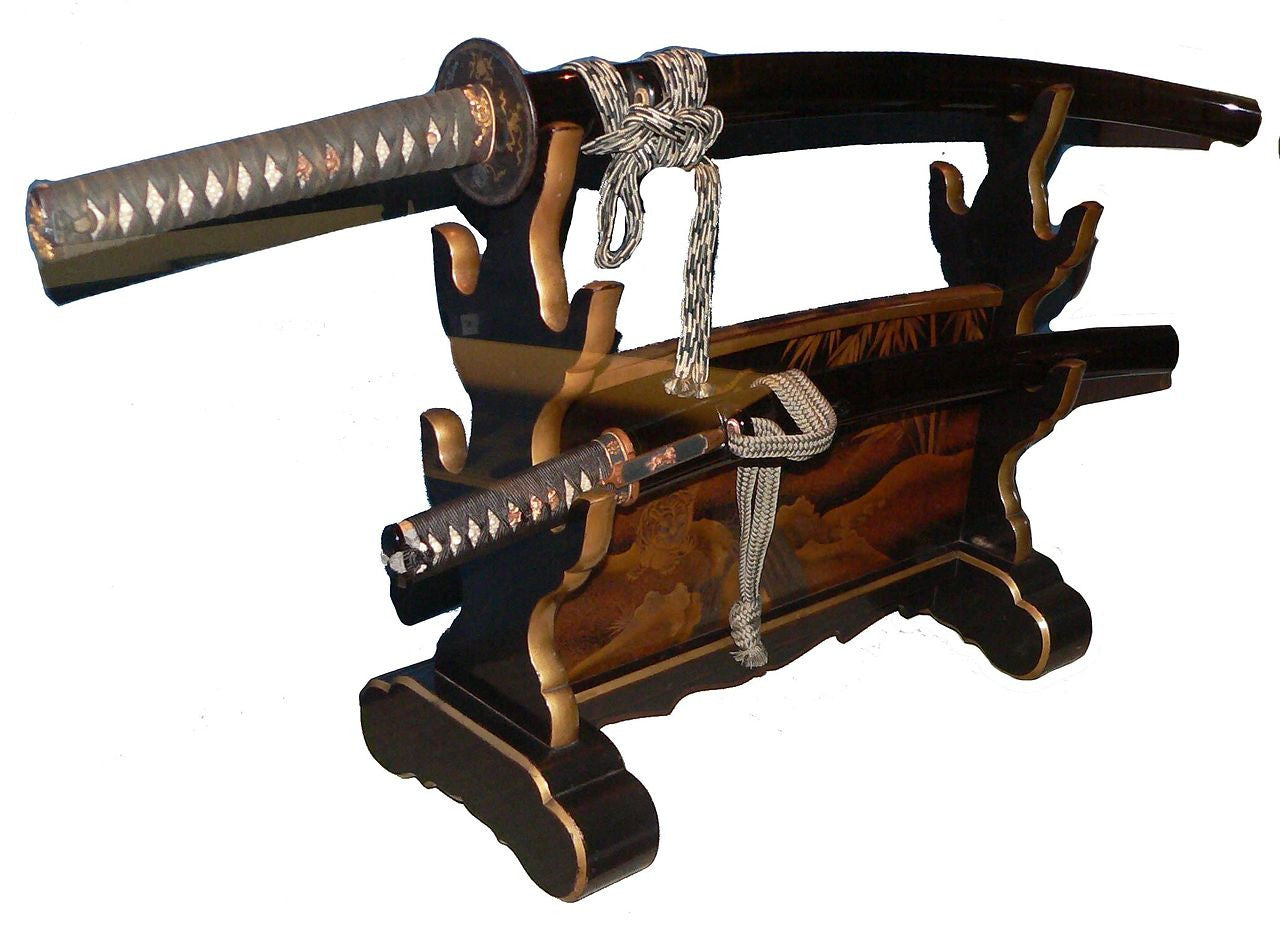

Like most soldiers today, samurai warriors of feudal Japan didn't carry just a single weapon. Rather, they often carried two or more weapons. A long-bladed sword, for instance, could be used to attack hostile forces from a safe distance, while a short-bladed weapon could be used for close combat.
There's actually a term used to describe the Japanese tradition of carrying two swords: daisho.
Origins of Daisho
Like many concepts of traditional Japanese martial arts, much of daisho's history remains shrouded in mystery. However, reports indicate that it became popular towards the latter half of the Muromachi period (1336 to 1573). At the time, wearing two weapons in this manner was limited to Japan's samurai class.
Later in 1871, during Japan's Meiji period, the Japanese government abolished the law requiring daisho to be worn by samurai warriors. In 1876, wearing swords in public was banned by most of the population, resulting in the steady decline of this traditional practice. However, daisho has experienced a revival of sorts among martial arts practitioners and collectors alike.
Purpose of Daisho
Wearing two swords served a few purposes, one of which is versatility in combat engagements. As stated above, a long-bladed weapon allowed samurai warriors to engage hostile forces at a safe distance, while short-bladed weapons were used in close combat. Daisho didn't specifically limit a samurai warrior's choice of weapons to a long-bladed weapon and a short-bladed weapon. Nonetheless, though, it made for sense for warriors to choose such a combination because of the tactile advantages it offers.
In addition to combat versatility, however, daisho was also worn to symbolize rank. Japanese samurai warriors would were two swords to display their rank, letting everyone know who they were.
Daisho Pairings
One of the earliest pairings of daisho was the tachi and tanto. the tachi was the predecessor to the katana, while the tanto was a smaller, almost knife-like sword. Later, samurai warriors began pairing the tanto with the uchigatana, and then a shorter version of the uchigatana.
When the katana was invented, however, samurai warriors began carrying it along with the wakizashi. Experts believe the wakizashi was a better choice of weapon for indoor fighting. So, before entering a building or temple, samurai warriors would leave their katana at the door, carrying only the sheathed wakizashi inside for personal protection. The combination of a wakizashi and katana became the preferred choice of daisho for most samurai warriors during feudal Japan.

Toyotomi Hideyoshi's 1588 order to collect farmers' weapons: what the edict said, how it was carried out, and why historians see it as a change of status more than disarmament.

Where handle rattles come from, how to check safely, when a mekugi needs replacing, and when to stop using the sword.

Around 170 Viking-age blades bear the name Ulfberht. Microscope studies show some were made of crucible steel and many were copies. Here is what we know.


