
Your Cart is Empty


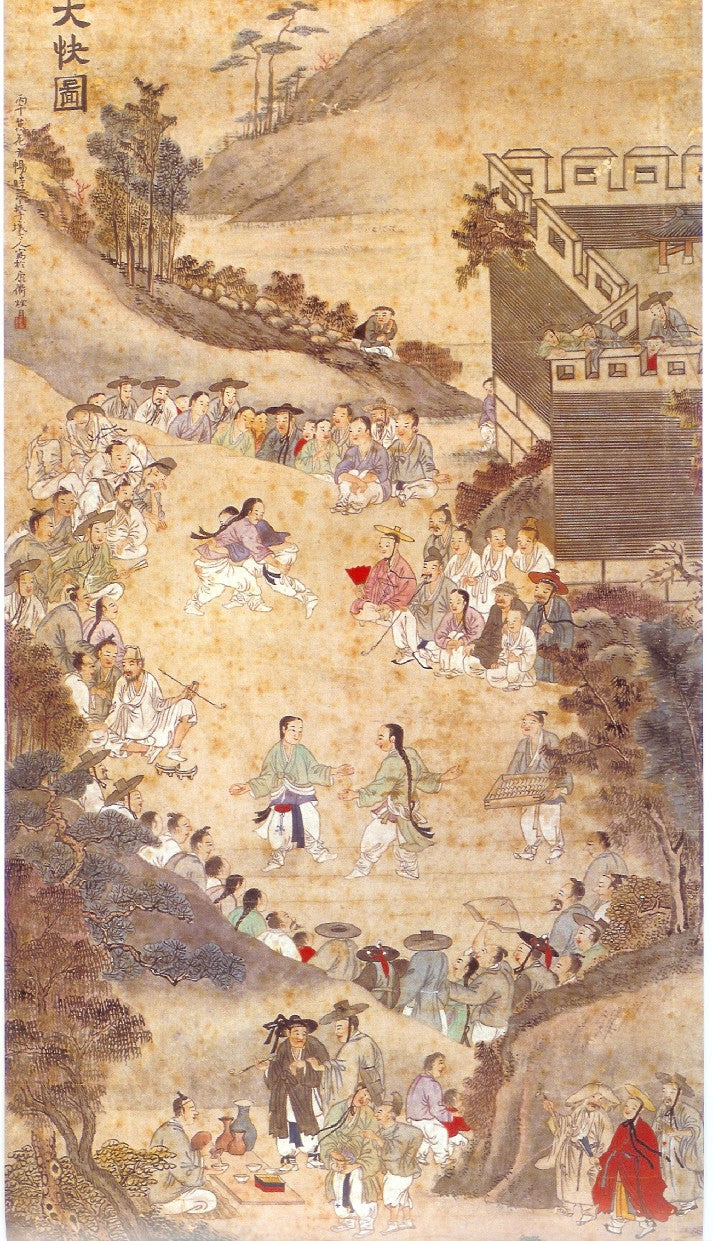

The Korean Peninsula has pioneered some of the world's most popular martial arts, all of which can be categorized into one of three main groups: Sado Musul, Bulgyo Musul or Gungjung Musul. Sado Musul consists of tribal martial arts. Bulgyo Musul consists of Buddhist miartial arts. And Gungjung Musul consists of royal court martial arts. Of course, there are dozens of individual martial arts within each of these three categories. One such traditional Korean martial art that's categorized as Sado Musul is bonguk geom.
What Is Bonguk Geom?
The term "bonguk geom" is somewhat confusing because it refers to two separate things. In Korea, bonguk geom is used to describe both a style of traditional martial arts as well as a type of sword. Sound confusing? It's not uncommon for words to have different meanings. This isn't limited strictly to the Korean Peninsula. Nearly all languages have words with two or more meanings. "Bonguk geom" is one of these words with a duel meaning.
Historians believe that the term "bonguk geom" was first introduced into the Korean dictionary back in the mid-1700s. Reports show that it was created by Crown Prince Sado. When initially created, however, the term referred strictly to a style of sword that featured a curved, single-edged blade. The sword followed a similar design as the Jedok geom, though it was forced with higher quality materials and craftsmanship.
Later, the term "bonguk geom" was also used to refer to a specific type of Joseon-era Korean martial arts. With the Goryo military ruling the Peninsula, several new martial arts schools were formed, some of which focused on swordsmanship. Eventually, this led to the creation of a special swordsmanship-based Korean martial art that became known as "bonguk geom."
What Bonguk Geom Means Today
Although the term "bonguk geom" is still used to describe the aforementioned Korean martial art as well as the Korean sword, it has formed a different meaning in recent years. Today, Korean swordsmanship schools use the term "bonguk geom" to highlight their nationality. According to Wikipedia, these schools teach practitioners about bonguk geom for the purpose of emphasizing their nationality.
To recap, bonguk geom is both a Korean martial art as well as a Korean sword. The term first appeared during the mid-1700s, during which it was used to describe a traditional Korean sword. Fast forward to Korea's Josean era, and the term was also used to describe a swordsmanship-based martial art.

The kris is a weapon, an heirloom and a sacred object. How to read its blade, how pamor patterns are made, who the empu are, and why UNESCO recognized it.

How to choose a sword for someone else: matching it to their art, sizing it without spoiling the surprise, useful extras, and lead times for custom work.

How to size an iaito for your height, weigh alloy against steel, judge the handle and fittings, and what to ask your sensei and the seller first.


