
Your Cart is Empty


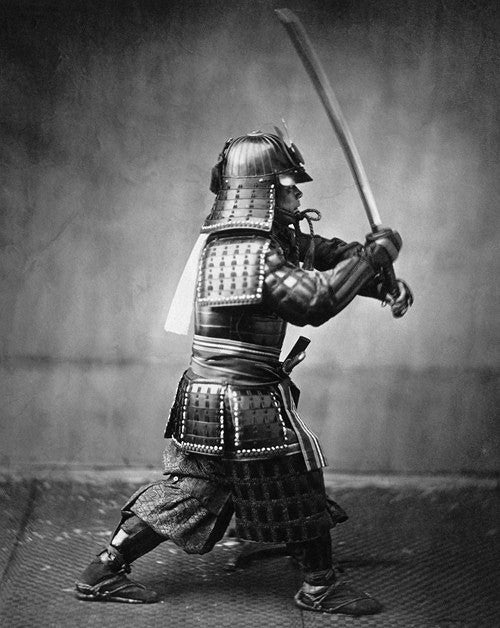

There are numerous styles of Japanese martial arts that incorporate swordsmanship. Kenjutsu, for instance, involves the use of specific type of curved sword, known as a nihonto. In Kenjutsu, the practitioner holds the nihonto with one or both hands to slice targets.
In Kenjutsu and other styles of martial arts, however, a technique known as ten-uchi is performed. Ten-uchi has been performed by martial arts practitioners for hundreds of years, and even today it's a widely popular technique in modern martial arts. So, what exactly is ten-uchi?
Ten-Uchi: The Basics
Ten-uchi refers to a style of traditional Japanese swordsmanship in which the practitioner makes an organized motion using his or her arms and wrists to perform a powerful downward strike. This isn't just an ordinary downward slice, however. It's performed in a specific manner using the practitioner's upper body.
When performing the ten-uchi, the practitioner extends his or her elbows in the final milliseconds of the strike; thus, allowing for increased stopping power. The practitioner begins by raising his or her sword into the air, and as the blade descends, the practitioner extends their elbows. Assuming it's performed correctly, this should "pop" the sword into the target.
Why Ten-Uchi is So Powerful
Ten-uchi is a highly effective cutting technique that utilizes the practitioner's body for power. The motion associated with the technique causes the practitioner's grip to twist while he or she is holding the handle, similar to wringing a towel. And with this twisting comes increased stopping power, as it's able to penetrate the resistance of an opposing force. The practitioner's arms then proceed to follow with the slice, after which the practitioner drags the sword all the way through the target.
While ten-uchi can be performed with a wide variety of swords and bladed weapons, it's most commonly performed with the nihonto. The nihonto is most efficient when used as a slicing weapon instead of chopping. So, when used in ten-uchi, the nihonto's ability to drag through the target creates additional damage and stopping power. It is said that samurai warriors used this technique against armored opponents for this very reason.
The Bottom Line...
Ten-uchi is just one of many swordsmanship techniques practiced in Japanese martial arts. It's a sword cutting technique that involves twisting and extending the arms and wrists to achieve optimal stopping power. Hopefully, this gives you a better understanding of ten-uchi and how it's performed.
Photo credit: madmrmox

Toyotomi Hideyoshi's 1588 order to collect farmers' weapons: what the edict said, how it was carried out, and why historians see it as a change of status more than disarmament.

Where handle rattles come from, how to check safely, when a mekugi needs replacing, and when to stop using the sword.

Around 170 Viking-age blades bear the name Ulfberht. Microscope studies show some were made of crucible steel and many were copies. Here is what we know.


