
Your Cart is Empty


A sword makes a memorable gift for a martial artist or a collector, and it is one they are likely to keep for life. It is also a gift that is easy to get slightly wrong: the wrong type for their art, the wrong size for their body, or a practice sword when they wanted something to display. A little quiet research beforehand avoids all of that. Here is what to find out, how to size a sword without giving the surprise away, and what to plan for if you are ordering custom work.
The martial art decides the kind of sword. An iaido student practises drawing and sheathing with a blunt practice sword ( iaito), and many schools have views on when, or whether, a student should use a sharp one. Someone who does tameshigiri, test cutting on rolled mats, needs a sharp sword built and heat treated for cutting. Kendo is practised with a bamboo sword ( shinai) and wooden swords, so a kendo player may want a real sword for display or for another sword art rather than for kendo training.
Korean sword arts such as kumdo and Haidong Gumdo have their own traditions. Practitioners may train with a live Korean sword ( jingum) for forms and cutting, or with a blunt practice sword ( kagum) for safer training. On our own swords, the main differences between a katana and a jingum are the way the handle is fixed and the shape of the tip, and a practitioner will usually know which they want.
If you are not sure, ask a training partner or their instructor. Many instructors are happy to help with a gift, and they can also tell you whether the school has rules about the swords students may bring.
A practice sword has to suit the person using it: the right length, a sensible weight, a secure handle and a scabbard that holds up to daily drawing. A display sword gives you more freedom. You can choose fittings around a theme that means something to the recipient, such as a family crest motif, a favourite animal or a maple leaf, and pick a scabbard finish for looks rather than durability.

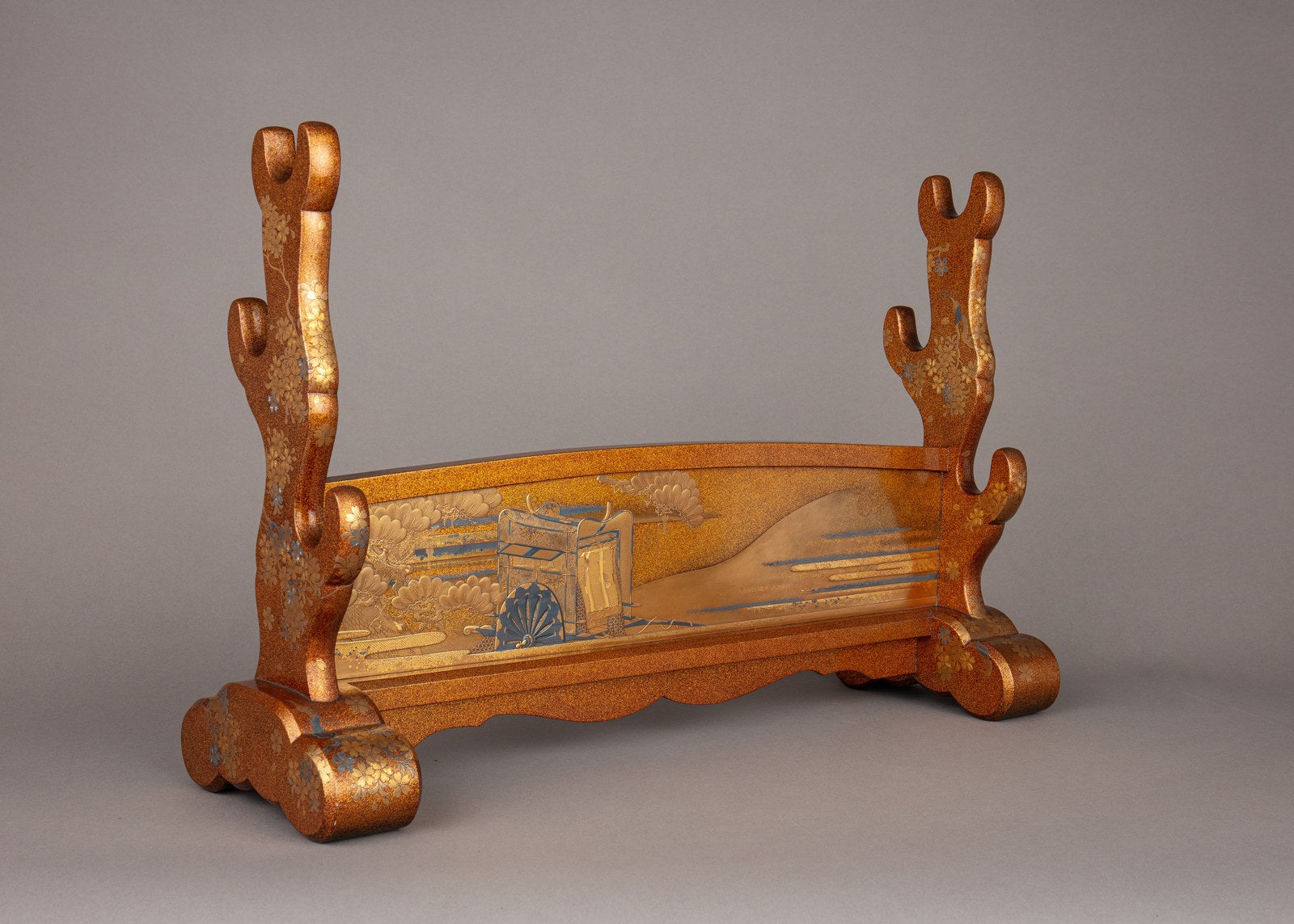
A lacquered sword stand (katana-kake), 18th century. The Metropolitan Museum of Art, public domain.
Many swords do both jobs. A well-made practice sword looks handsome on a stand between classes. If display is the main purpose, plan where it will go: away from direct sunlight and damp, and out of reach of children. Our guide to displaying a katana covers the details.
For a practice sword, blade length and handle length matter. There are a few ways to find them without asking the recipient directly:
If none of these works, consider giving the idea rather than the object. A card promising a sword, perhaps with a photograph of the model or a mounting you have in mind, lets the recipient choose the size and details with you. For a custom sword, that approach often works better than guessing.
A few additions turn a sword into a complete gift:

The maintenance kit from our maintenance parts collection.
If the recipient is new to owning a sword, add a short note on care. Our article on the dos and don'ts of caring for a katana is a good place to start.
Plan backwards from the date you need it. An in-stock sword ships from Canada, and our shipping policy gives current delivery times. A custom sword takes 14 weeks or more from order to delivery, so birthdays and holidays need planning well ahead.
Check the return terms before you buy, because gifts are the purchases most likely to need a change. With us, a stock sword can be returned unused, with a restocking fee and shipping deducted, but a custom sword is final once ordered and cannot be returned. That is another reason to confirm the size before ordering custom work.
Finally, check the local rules. Laws on owning, carrying and importing swords differ between countries, provinces, states and cities, and some places set age limits. If you are sending a sword across a border, import duties and taxes are not included in our prices or shipping charges, so find out who will pay them before it arrives on someone's doorstep. Check the rules where the recipient lives before you order.
When you know what they practise and roughly what size they need, browse our Japanese swords, Korean swords and training swords, or get in touch and we will help you choose.

How to size an iaito for your height, weigh alloy against steel, judge the handle and fittings, and what to ask your sensei and the seller first.

Toyotomi Hideyoshi's 1588 order to collect farmers' weapons: what the edict said, how it was carried out, and why historians see it as a change of status more than disarmament.

Where handle rattles come from, how to check safely, when a mekugi needs replacing, and when to stop using the sword.


